


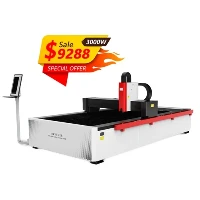
Precision cutting machines have revolutionized various industries, providing businesses with cost-effective, efficient and accurate solutions to their cutting needs. These machines use different techniques to cut, slice or engrave various materials, including metals, plastics, and fabrics, among others. This article aims to explore the current state of precision cutting machines, their application in different industries, their pros and cons, and their potential for future use.
Types of Precision Cutting Machines
1. Water Jet Cutting Machines
Water jet cutting machines use high-pressure water streams to cut through materials, such as metal. The machine is equipped with an abrasive material that mixes with the water to increase the cutting power of the stream. Water jet cutting is preferred over other cutting methods because it doesn't generate heat that could warp or melt the material, resulting in a more precise cut. Additionally, water jet cutting can cut through almost any material, from stone to rubber.
2. Laser Cutting Machines
Laser cutting machines use laser technology to cut through various materials, including metals, plastics and fabrics, by directing a high-intensity laser beam onto the material. The beam is controlled by a computer program that provides precise cutting specifications, resulting in a highly accurate cut. Laser cutting machines are preferred in the manufacturing industry due to their high precision, speed and flexibility, enabling consistent and quality cuts for large-scale production.
3. CNC-Router Cutting Machines
CNC-router cutting machines are programmable cutting machines that are ideal for cutting shapes and designs into materials such as wood, plastics, and even metals. The machine is operated using a computer-numerical-control (CNC) system that provides highly accurate cutting specifications. CNC-router cutting machines are ideal for small production runs and customizing products.
4. Plasma Cutting Machines
Plasma cutting machines use hot plasma gas to cut through materials such as metals. They are highly effective at cutting through thick materials and can produce precise cuts. Plasma cutting machines are often used in the construction and automotive industries, where precise cuts are required to ensure that the finished product is of high quality.
Application of Precision Cutting Machines
1. Manufacturing
Precision cutting machines are highly applicable in the manufacturing industry, where they are used to create uniform and precise cuts on materials such as metals, plastics, and fabrics. Laser cutting machines are popular in the manufacturing of consumer electronics, metal products, and automotive parts, while water jet cutting machines are ideal for cutting thick sheets of metal or stone tiles. CNC-router cutting machines are useful for cutting shapes and designs on materials.
2. Fabrication
Precision cutting machines are used in the fabrication industry to cut sheets of metal or other materials into a specific shape or size. Plasma cutting machines are used to create highly detailed and precise cuts on metal sheets for use in construction, the automotive industry or manufacturing of consumer goods.
3. Aerospace
Precision cutting machines are highly applicable to the aerospace industry, where the machinery is used to cut and shape materials used in the manufacture of aircraft, rockets, and satellites, among other aerospace products. The machines are used to cut and shape lightweight and strong materials such as carbon composites, titanium, aluminum, and other metals, as precision cutting machines have the ability to deliver exact cuts within fundamentally correct time.
4. Architecture and Construction
Precision cutting machines, especially plasma cutting machines, are widely used in the construction and architectural industries to cut and shape materials that are used in construction projects. The machines are used to cut and shape metal sheets, thereby reducing labor-intensive processes and producing more precise cuts.
Pros and Cons of Precision Cutting Machines
Pros
1. High precision cutting: Precision cutting machines deliver highly accurate cuts, resulting in a cleaner and more uniform end product.
2. Increased productivity: Precision cutting machines are automated and can perform high-speed cutting with little to no error, resulting in fewer errors and increased productivity.
3. Versatility: Precision cutting machines can cut a range of materials with relative ease, making them highly versatile and useful across multiple industries.
4. Cost-effective: In the long run, precision cutting machines are more cost-effective than manual cutting methods due to reduced errors, increased productivity, and reduced labor costs.
Cons
1. Initial Investment: Precision cutting machines have a high initial investment cost, making them less accessible to smaller businesses.
2. Technical expertise required: Precision cutting machines require technical knowledge to operate and maintain, making them less user-friendly for those unfamiliar with the technology.
3. Limited cutting thickness: Precision cutting machines are limited to cutting thickness below 1 inch, making them unsuitable for thicker materials.
Future of Precision Cutting Machines
The future of precision cutting machines lies in the development of more advanced technologies that can enable precision cuts in increasingly complex shapes and sizes. The machines’ capabilities are likely to expand to accommodate new materials and applications, making them even more versatile and useful.
Additionally, the automation of precision cutting machines is likely to become more advanced, allowing for self-reprogramming and the use of advanced algorithms for better decision-making. AI, too, may begin to play a role in the operation of these machines, improving their efficiency and precise cutting capabilities further.
Conclusion
Precision cutting machines offer a range of benefits to different industries, including high precision cutting, increased productivity, and versatility. Moreover, precision cutting machinery also comes with challenges, including a relatively high initial investment, the requirement of technical expertise, limitations in cutting thickness, and the need for proper safety measures. In the future, the machines' capabilities are likely to expand further, with new technologies, automation, and AI playing vital roles in enhancing efficiency, accuracy, and productivity. Overall, precision cutting machines are essential tools for businesses looking to optimize their cutting processes while delivering high-quality and uniform end products.