


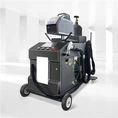
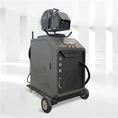

1. Laser Source Instability
The laser generator itself is the heart of the cutting machine.
Aging of the laser source: Over time, components like diodes or pumping modules degrade, causing fluctuations in output.
Temperature sensitivity: Many lasers are sensitive to overheating, and inadequate cooling can lead to power instability.
Electrical supply variation: An unstable power supply or voltage fluctuation can affect the consistency of the laser beam.
2. Optical Path Problems
The path through which the laser travels must remain clean and aligned.
Contaminated lenses or mirrors: Dust, oil, or smoke residues absorb part of the energy, causing unstable transmission.
Misalignment of optics: Even a slight deviation in mirror or lens alignment will cause energy loss and fluctuations.
Protective lens damage: Scratches or cracks can lead to beam scattering and unstable output.
3. Cooling System Issues
Lasers produce a large amount of heat during operation.
Insufficient cooling capacity: A weak or failing chiller cannot keep the laser modules at stable temperature.
Blocked water circulation: Dirt, scaling, or pipe blockage reduces cooling efficiency.
Temperature fluctuations: Inconsistent cooling water temperature can make the laser beam unstable.
4. Fiber Transmission Efficiency
For fiber laser systems, the transmission quality of the optical fiber plays a key role.
Fiber bending or damage: Sharp bends or physical stress reduce transmission efficiency.
Contamination at fiber connectors: Dust or oil at connectors interferes with laser transmission.
Aging fibers: Over time, fiber quality may degrade, lowering stability.
5. Process and Environmental Factors
Assist gas pressure instability: Fluctuating oxygen or nitrogen pressure may indirectly affect cutting consistency.
Ambient temperature or humidity: Extreme environmental conditions can influence both optics and electronics.
Vibration: External vibration from nearby machines can disrupt precision alignment.
Conclusion
Unstable laser output during cutting can arise from multiple factors, including the laser source, optics, cooling system, fiber transmission, and environmental conditions. Regular maintenance, such as cleaning optics, checking cooling systems, stabilizing the power supply, and monitoring fiber quality, is essential for ensuring consistent laser performance. Preventive care not only improves cutting quality but also extends the lifespan of the equipment.
-- Rayther Laser Lyra Zhang
https://www.raytherlasercutter.com/laser-cutting-machine/fiber-laser-cutting-machine.html