


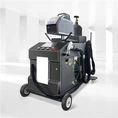
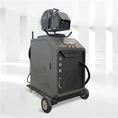

Introduction to Laser Welding Technology
Briefly describe the wide application of laser welding technology in various industries and its advantages over traditional welding, such as small heat-affected zone and fast welding speed, so as to lead to the discussion on the factors affecting welding quality.
Equipment-Specific Factors
- Laser Generator
Explain the impact of the power stability and beam quality of the laser generator on welding results. Unstable power will cause fluctuations in welding effects, while poor beam quality will affect precision and strength.
- Optical Focusing System
Elaborate on the importance of the quality of components such as lenses for accurately focusing the laser beam. Poor quality will lead to energy dispersion, which in turn affects welding depth and quality.
- Motion Control System
Illustrate its role in controlling the movement precision and stability of the welding head. Insufficient precision and stability will result in deviations and jitters in the welding trajectory.
- Cooling System
Explain the necessity of a well-functioning cooling system for maintaining the appropriate operating temperature of the equipment. Overheating will affect the performance and service life of components.
- Control System
Describe how an advanced and stable control system enables precise parameter adjustment and real-time monitoring. A poor control system makes it difficult to ensure the ideal welding state.
Process Parameter Factors
- Laser Pulse Waveform
Explain that different metals have different degrees of laser reflection and absorption, requiring laser with different waveforms to achieve the optimal crystal arrangement of weld metal. Welding machines with single-waveform power supplies have low flexibility.
- Laser Spot Diameter
Clarify that the spot diameter determines the power density and processing range. Unreasonable optical design will make it impossible to accurately control the spot diameter, thus affecting welding quality.
- Laser Pulse Frequency
Elaborate on the need to balance the laser output energy and frequency to meet the requirements of welding speed. Excessively high frequency with insufficient energy is prone to causing welding failures.
- Laser Pulse Energy
Introduce the function of the maximum energy of a single laser pulse, and explain that the appropriate energy range should be selected according to actual needs.
- Welding Speed
Explain the welding problems caused by excessively fast or slow welding speed, such as reduced penetration depth and excessive material melting. The appropriate speed needs to be determined by considering multiple factors.
Welding Material Factors
- Material Type
Elaborate on the significant impact of different thermal physical properties of various materials on welding results. For example, materials with high thermal conductivity require higher laser energy.
- Material Surface Condition
Explain the influence of material surface roughness, cleanliness and oxidation degree on laser absorption and reflection. Pre-welding cleaning and pretreatment are necessary.
Environment-Related Factors
- Shielding Gas
Introduce the types of commonly used shielding gases (such as argon and helium) and their roles in welding, as well as the impact of gas flow rate on welding quality.
- Ambient Temperature and Humidity
Briefly describe the possible impact of ambient temperature and humidity on welding quality. For instance, high humidity may cause pores in the weld.
Summary and Outlook
Summarize the various factors affecting the welding quality of laser welding machines, emphasize the importance of comprehensively controlling these factors for improving welding quality, and look forward to the development prospect of laser welding technology under the precise control of influencing factors.
--Rayther Laser Jack Sun--