


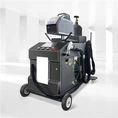
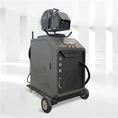
I. Cooling System Maintenance
Replacement Frequency: Replace deionized water or specialized coolant every 1–2 weeks (adjust based on water quality and usage frequency) to prevent scaling that reduces heat dissipation efficiency.
Temperature Control: Maintain water temperature at 25–30°C in summer and 15–25°C in winter, with fluctuations ≤±2°C to avoid dew formation on lenses/lasers due to temperature differences.
Filter Replacement: Inspect cooling system filters monthly and replace promptly if clogged to ensure unobstructed water circulation.
Daily check for leaks at water pipe connections and signs of aging/cracking in hoses, with special attention to high-pressure pipes in high-power devices.

II. Optical System Maintenance
Frequency: Clean focusing and reflecting lenses after each shift (or before material change in precision machining scenarios).
Method: Use anhydrous ethanol (purity ≥99.9%) and lint-free cloths, wiping from the center to the edge in a clockwise motion to avoid scratches; stubborn stains may require specialized optical swabs.
Installation: Wear powder-free gloves and ensure O-rings are intact during lens installation to prevent dust entry into the optical path.
Weekly test the laser spot for roundness using a marking test; re-calibrate mirror angles if deviation exceeds 1mm (performed by certified engineers).
III. Mechanical System Maintenance
Cleaning & Lubrication: Daily remove metal debris from guide rails/racks using compressed air and apply specialized rail oil (e.g., Shell Tonna S2 M); lubricate linear guides every ≤8 hours of operation.
Fastening Check: Weekly inspect for loose screws on rail sliders and rack bolts, with extra focus on high-speed cutting machines prone to vibration-induced loosening.
Remove residue on the cutting platform promptly to avoid positioning errors; regularly apply anti-slip grease to gears/racks to prevent slippage.
IV. Electrical & Control System Maintenance
Dust & Moisture Control: Monthly clean dust from the electrical cabinet with dry compressed air and check fan operation; add desiccants in humid environments to prevent circuit board shorting.
Wiring Inspection: Check for loose connections on servo motor and laser power cables, and inspect for wear on cable insulation (common in high-motion components).
Daily test the sensitivity of limit switches, home sensors, and collision protection devices to prevent over-travel damage.
V. Auxiliary System Maintenance
Monitor cylinder pressure (oxygen ≤10MPa, nitrogen ≤20MPa) and check for gas leaks at fittings; replace filter cartridges quarterly to prevent nozzle blockages from impurities.
Daily drain condensate from the compressor tank, clean the intake filter weekly, and replace lubricating oil according to the manufacturer's schedule (typically every 500 hours).
VI. Software & Data Backup
Regularly update machine firmware (obtain secure versions from the manufacturer) and prevent virus intrusion; double-check parameter settings to avoid operational errors.
Monthly backup cutting process parameters (e.g., power, speed, focal position for different materials) to an independent hard drive or cloud storage for quick fault recovery.
VII. Maintenance Records & Inspection Sheets
Maintain a Equipment Maintenance Log to record maintenance dates, tasks, replaced parts, and anomalies (e.g., abnormal water temperature, lens contamination levels) for traceability.
High-power devices (≥6000W) should use a vibration detector to monitor machine vibrations weekly; investigate mechanical rigidity issues if the threshold exceeds 0.5g.
Key Notes
Shutdown Sequence: Turn off the laser first, let the cooling system run for 10 minutes, then power down to ensure proper laser cooling.
Safety Protection: Always disconnect power during maintenance, wear protective goggles (to avoid residual laser eye damage), and hang "Do Not Start" on high-power devices.