


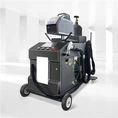
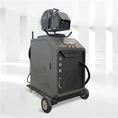

In the field of welding, air-cooled and water-cooled welding machines, as two common types of equipment, each have their own unique advantages and disadvantages. Understanding the differences between them is crucial for enterprises and welding practitioners to select the appropriate welding equipment. Next, we will conduct a detailed comparison of the advantages and disadvantages of air-cooled and water-cooled welding machines from multiple aspects, such as heat dissipation principles, cooling efficiency, equipment stability, portability, and maintenance costs.
Differences in Heat Dissipation Principles
Air-cooled Welding Machines
Air-cooled welding machines mainly rely on fans to force air flow to dissipate the heat generated during the welding process. The fans draw in cold air from the outside into the interior of the equipment. Through a specific air duct design, the cold air passes through the heat-generating components, such as lasers and welding heads. After absorbing the heat, the air is then exhausted from the equipment. This heat dissipation method has a relatively simple structure, without complex pipelines and coolant circulation systems.
Water-cooled Welding Machines
Water-cooled welding machines, on the other hand, utilize circulating coolant (usually water or a mixture with antifreeze) to absorb heat. The coolant circulates in a closed pipeline system. First, it flows through the heat-generating components of the welding equipment, absorbing heat and increasing in temperature. Then, it flows to the radiator or chiller for cooling. After cooling, the coolant returns to the heat-generating components to continue the cycle. The water-cooling system can transfer heat more efficiently because the specific heat capacity of the liquid is larger than that of air. When absorbing the same amount of heat, the temperature change of the liquid is relatively small.
Comparison of Cooling Efficiency
Air-cooled Welding Machines
The cooling efficiency of air-cooled welding machines is relatively limited. Due to the low specific heat capacity of air, its heat absorption capacity is inferior to that of liquids, and the thermal conductivity of air is also weak. When dealing with high-power and long-duration welding operations, the air-cooling system may not be able to dissipate all the generated heat in a timely manner, causing the temperature of the equipment to gradually rise. It is generally suitable for scenarios such as thin-plate welding with low power or sample proofing within 4 hours of daily operation, for example, spot welding of thin-walled materials with a thickness of less than 1mm in some small processing workshops.
Water-cooled Welding Machines
Water-cooled welding machines have high heat dissipation capabilities. The strong heat absorption capacity of the coolant enables it to quickly absorb a large amount of heat generated by the equipment and cool down rapidly through the radiator or chiller. This allows water-cooled welding machines to support 24-hour continuous high-load operations, making them highly suitable for large-scale production scenarios such as automotive manufacturing and aerospace. For instance, in automotive manufacturing, the welding of components such as engine blocks and battery pack casings has extremely high requirements for the continuous working ability and heat dissipation performance of the welding equipment, and water-cooled welding machines can meet these requirements well.
Comparison of Equipment Stability
Air-cooled Welding Machines
In high-temperature environments or during long-term high-load operations, the internal components of air-cooled welding machines are prone to accelerated aging. Since the air-cooling system has difficulty maintaining the equipment temperature within a stable range, significant temperature fluctuations can affect the performance and lifespan of electronic components, thereby increasing the risk of equipment failure. Especially during hot summer periods, the probability of air-cooled welding machines malfunctioning is relatively high.
Water-cooled Welding Machines
Water-cooled welding machines can maintain a constant temperature during operation, keeping the temperature fluctuations of the core components of the equipment within a very small range, usually within ±1℃. The stable temperature environment greatly reduces the aging rate of core components such as laser generators and welding heads, reducing the equipment failure rate by 30% - 50%. In the 3C electronics field, where high precision and stability of welding are required, such as the welding of thin-walled components like mobile phone frames and laptop casings, water-cooled welding machines, with their stable performance, can limit the heat-affected zone to a minimum, preventing component damage due to high temperatures and ensuring the performance and reliability of electronic products.
Differences in Portability
Air-cooled Welding Machines
Air-cooled welding machines have excellent portability and flexibility. Without complex water-cooling systems, related pipelines, water tanks, and other components, their overall volume is small and weight is light, making them easy to move and carry. This makes them very suitable for situations where the working site needs to be frequently changed or for outdoor operations, such as small processing workshops that need to work at different construction sites or temporary outdoor welding tasks. Moreover, air-cooled welding machines can be used immediately after startup without waiting for the water temperature to reach the set temperature and other preparation processes, which greatly saves time and improves work efficiency.
Water-cooled Welding Machines
Due to the water-cooling system, including water tanks, water pumps, pipelines, and radiators or chillers, water-cooled welding machines are relatively large in volume and heavy in weight as a whole. This limits their application in some scenarios where frequent movement or limited space is required. Although the volume and weight are not significant issues when used in fixed factory workshops and other places, the portability disadvantage of water-cooled welding machines is more obvious when the working location needs to be flexibly changed.
Analysis of Maintenance Costs
Air-cooled Welding Machines
The air-cooling system has a simple structure, without problems such as coolant leakage, waterway blockage, and water pump failure. Daily maintenance mainly focuses on cleaning and inspecting the fans to prevent dust and other debris from accumulating and affecting the heat dissipation effect. There is no need to regularly replace consumables such as coolant, so the maintenance workload and costs are relatively low. However, if the equipment is used in a dusty environment, the heat sinks are prone to dust accumulation. Once the dust accumulation is severe, the heat dissipation efficiency will be significantly reduced. At this time, the heat sinks need to be cleaned more frequently, and equipment failure may even occur due to dust accumulation, increasing the maintenance cost.
Water-cooled Welding Machines
Water-cooled welding machines require regular replacement of the coolant, generally recommended to be replaced every 3 - 6 months to ensure the cooling performance of the coolant and prevent damage to the equipment caused by coolant deterioration. At the same time, it is necessary to regularly check whether there are leaks in the water-cooling system pipelines, whether the water pump is operating normally, and whether the radiator is clean. Although the overall lifespan of the equipment is extended due to its high stability, the initial equipment procurement cost and regular maintenance costs are relatively high. However, from the perspective of long-term comprehensive usage costs, due to its low equipment failure rate, in scenarios with high requirements for equipment stability, such as large-scale production, the comprehensive cost may not be much higher than that of air-cooled welding machines.
Differences in Applicable Scenarios
Air-cooled Welding Machines
Air-cooled welding machines are suitable for welding small and thin workpieces and scenarios with high requirements for equipment portability. For example, the welding of small metal ornaments in small processing factories or non-continuous small-batch production when making samples in laboratories. In these scenarios, the advantages of air-cooled welding machines, such as flexible operation and low cost, can be fully utilized.
Water-cooled Welding Machines
Water-cooled welding machines are more suitable for welding large workpieces, scenarios with strict requirements for welding quality, and situations that require long-term continuous use. For example, the welding of aircraft components in the aerospace field not only has extremely high requirements for welding strength and quality but also often requires long-term continuous operation. Water-cooled welding machines can meet these stringent requirements and ensure the stability and consistency of welding quality.
Both air-cooled and water-cooled welding machines have their own advantages and disadvantages. When selecting welding equipment, it is necessary to comprehensively consider actual needs, such as the type, size, and thickness of the workpieces to be welded, the working environment, the working duration, and the budget, weigh the pros and cons, and make the most suitable choice to achieve the best welding results and economic benefits.
--Rayther Laser Jack Sun--