


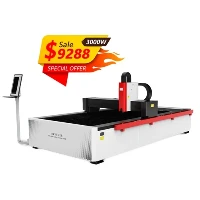
As a pivotal component of advanced manufacturing, laser welding automation is poised for transformative growth over the next 20 years. Here are the key trends that will define its evolution:
1. Breakthroughs in Efficiency & Technology
Advancements in laser technology will yield higher-power, more compact systems with improved electro-optical conversion rates. These innovations will enhance welding speed, quality, and energy efficiency, broadening industrial applications.
2. Expansion into High-Tech Industries
Laser welding will see growing adoption in sectors like new energy (particularly EV batteries), aerospace, biomedical devices, and precision manufacturing, driven by its unmatched precision and deep-penetration capabilities.
3. Surging Market Demand
Global manufacturing upgrades, coupled with rising labor costs and skilled-worker shortages, will fuel demand for automated, intelligent welding solutions-positioning laser welding as the industry standard.
4. Smart Automation Integration
The convergence of laser welding with robotics, AI, and IoT will enable fully autonomous production lines featuring adaptive control, real-time monitoring, and self-optimizing processes.
5. Green Manufacturing Focus
Stricter environmental regulations will accelerate the shift toward laser welding's eco-friendly advantages, including non-contact processes, reduced waste, and lower energy consumption.
6. Customization & Flexible Production
Consumer demand for personalized products will push laser welding systems toward agile, small-batch production, allowing rapid process adjustments for diverse designs.
7. Rise of Domestic Laser Tech
Local manufacturers will ramp up R&D, boosting the performance and reliability of homegrown lasers while reducing costs-strengthening their global market position.
8. Next-Gen Technologies on the Horizon
High-power fiber lasers: Enabling faster, deeper welds for thick materials.
Ultrafast lasers: Revolutionizing micro/nano-scale welding in electronics and medical devices.
Hybrid laser-arc welding: Merging laser precision with arc welding's versatility.
AI-powered robots: Equipped with vision systems for complex weld paths.
Real-time monitoring: Automated parameter adjustments for consistent quality.
9. Talent Development & Innovation
As technology advances, industry and academia will collaborate to cultivate specialized expertise and drive ongoing breakthroughs.
10. Global Collaboration & Market Growth
Chinese firms will deepen international partnerships, expanding into overseas markets to compete globally and elevate their technological influence.
The Road Ahead
Laser welding automation will thrive at the intersection of innovation, market needs, and cross-industry adoption. To lead in this era, manufacturers must prioritize R&D, talent investment, and global cooperation-ensuring sustainable growth in the smart manufacturing revolution.