


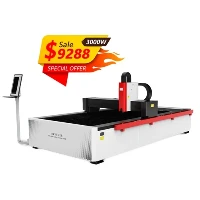
Reasons for errors caused by laser cutting machine cutting
Abstract
Laser cutting has become an increasingly popular technology employed by various industries. However, despite its precision and accuracy, errors can occur during the cutting process. These errors can be caused by a multitude of factors, including machine calibration, material type, and cutting speed. In this paper, we examine the common causes of errors in laser cutting machines, and propose solutions to mitigate their effects. By understanding the underlying mechanisms behind these errors, we hope to help improve the accuracy and efficiency of laser cutting machines in various industries.
Introduction
Laser cutting is a highly precise and efficient technology for cutting various materials. It is widely used in industries such as manufacturing, aerospace, and automotive, among others. Compared to traditional cutting methods such as mechanical cutting, laser cutting offers superior accuracy and speed, allowing for the production of highly complex shapes and designs.
Despite its many advantages, laser cutting is not without its drawbacks. Errors can occur during the cutting process, which can result in wasted materials, reduced accuracy, and increased production time. Furthermore, these errors can have significant impacts on the quality and integrity of the final product. In this paper, we examine the reasons for errors in laser cutting machines, and propose possible solutions to mitigate their effects.
Calibration errors
One of the most common causes of errors in laser cutting machines is calibration errors. The calibration of the machine must be done periodically to ensure that the laser beam is correctly positioned and focused. Improper calibration can lead to inconsistent cuts, and even damage to the machine itself.
There are several factors that can contribute to calibration errors. For example, wear and tear on the machine or its parts can cause misalignments. Similarly, environmental factors such as temperature and humidity can affect the accuracy of the laser beam. Additionally, user error such as incorrect input of cutting parameters or incorrect focus point can cause calibration errors.
To avoid calibration errors, it is important to perform regular maintenance on the machine, including cleaning the lens and mirrors, and ensuring that all parts are properly lubricated and tightened. It is also recommended to use software that can automatically calibrate the machine and adjust its parameters to compensate for any environmental or user-related factors.
Material properties
Another important factor that can contribute to errors in laser cutting is the type of material being cut. Different materials have different properties, such as thickness, melting point, and reflectivity, which can affect the cutting process.
For example, materials with high reflectivity, such as copper and aluminum, can cause the laser beam to reflect or scatter, resulting in incomplete cuts or damage to the machine. Similarly, materials with high thermal conductivity, such as steel, can cause the heat generated by the laser to dissipate too quickly, resulting in incomplete cuts and a rough surface finish.
To minimize errors caused by material properties, it is important to select the appropriate laser cutting parameters for each material. This includes adjusting the laser power, cutting speed, and focus point based on the material properties. In some cases, it may also be necessary to use a different type of laser, such as a fiber laser, which is better suited for cutting reflective materials.
Cutting speed
The cutting speed, or the rate at which the laser moves across the material, is another factor that can affect the accuracy of laser cutting. If the speed is too fast, the laser may not have enough time to cut through the material completely. Conversely, if the speed is too slow, the heat generated by the laser may accumulate and cause melting or warping of the material.
To determine the optimal cutting speed, it is important to consider the material type and thickness, as well as the power and focal length of the laser. In general, thicker materials require slower cutting speeds, while thinner materials can be cut at higher speeds. Additionally, it is recommended to perform test cuts on a small section of the material to determine the optimal cutting speed for each application.
Conclusion
Errors in laser cutting machines can have significant impacts on the accuracy and efficiency of the cutting process, as well as on the quality of the final product. Calibration errors, material properties, and cutting speed are some of the most common factors that can affect the accuracy of laser cutting. To minimize errors, it is important to perform regular maintenance on the machine, select the appropriate laser cutting parameters for each material, and determine the optimal cutting speed based on the material type and thickness. By understanding the underlying mechanisms behind these errors, we can improve the accuracy and efficiency of laser cutting machines in various industries.

Reasons For Errors Caused By Laser Cutting Machine Cutting
May 20, 2023 Leave a message
Send Inquiry