


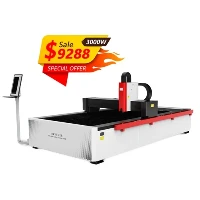
As someone who works in the laser cutting industry, I often encounter customers who currently use plasma cutting machines and are curious about the benefits of switching to laser cutting. Both technologies have their applications, but laser cutting offers significant advantages in precision, efficiency, and long-term cost savings. Below, we explore the key differences to help you make an informed decision.
1. Cutting Precision and Edge Quality
Laser Cutting: Delivers extremely high precision (±0.1mm or better) with smooth, burr-free edges, reducing the need for secondary finishing. Ideal for intricate designs and fine details.

Plasma Cutting: Good for rough cuts but produces a wider kerf (cut width) and rougher edges due to the high-temperature plasma arc. Often requires additional grinding or machining.
2. Material Versatility and Thickness
Laser Cutting: Excels at cutting thin to medium-thickness metals (up to 25mm for CO₂ lasers, 30mm+ for fiber lasers) with superior accuracy. Also works well with plastics, wood, and composites.
Plasma Cutting: Better for very thick metals (over 30mm) but struggles with non-conductive materials. The heat-affected zone (HAZ) is larger, which can distort thinner materials.
3. Speed and Efficiency
Laser Cutting: Faster than plasma for thin to medium sheets due to rapid beam movement and no physical contact. Modern fiber lasers achieve speeds up to 100m/min.
Plasma Cutting: Slower on thinner materials but maintains reasonable speed on thick plates. However, piercing time and edge taper reduce efficiency.

4. Operating Costs and Energy Consumption
Laser Cutting (Fiber Lasers): Higher initial investment but lower long-term costs-minimal consumables, reduced energy use, and less gas dependency than CO₂ lasers.
Plasma Cutting: Lower upfront cost but higher operational expenses (frequent electrode/nozzle replacements, high power consumption, and compressed air/gas needs).
5. Automation and Integration
Laser Cutting: Easily integrated with CNC systems and automation for lights-out manufacturing. Software-friendly with high repeatability.
Plasma Cutting: More challenging to automate for precision tasks due to torch wear and variability in cut quality.

Conclusion: Why Choose Laser Cutting?
If your operations demand high precision, cleaner edges, faster processing of thin-to-medium metals, and lower long-term costs, laser cutting is the clear winner. While plasma remains viable for heavy industrial cutting, laser technology provides unmatched flexibility and efficiency for most modern fabrication needs.