


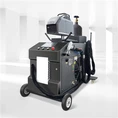
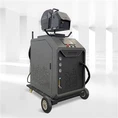

Laser welding machines, as efficient and precision welding equipment that utilizes high-energy-density laser beams as heat sources, possess significant advantages such as concentrated energy, small heat-affected zone, and stable welding quality. With these characteristics, they can play an irreplaceable role in numerous industries and fields, especially in scenarios with stringent requirements for welding quality, precision, and efficiency, where their effectiveness is maximized.
Automotive Manufacturing Industry: Enhancing Production Efficiency and Welding Precision
In the automotive manufacturing sector, laser welding machines have become one of the key production equipments. The welding of core structures such as automobile bodies, chassis, and engine components has extremely high requirements for precision and strength. Traditional welding methods are prone to problems like deformation and false welding, while laser welding can effectively avoid these defects.
For example, in body welding, laser welding can realize high-strength connection of steel plates with different thicknesses, reduce the number of welding points, improve the overall rigidity of the body, reduce the weight of the car, and enhance safety. In addition, the welding of battery packs for new energy vehicles relies heavily on laser welding technology. It can perform micro-seam welding on precision components such as battery tabs and casings, ensuring the sealing and conductivity of the battery, and guaranteeing battery performance and service life.
Electronics and Microelectronics Industry: Meeting Miniaturized Welding Needs
Products in the electronics and microelectronics industry are often small in size and have precise structures, placing almost harsh requirements on welding precision and heat influence control. Laser welding machines, with their advantages of small focused spot (up to the micrometer level) and controllable energy, have become the ideal choice in this field.
In the manufacturing of integrated circuits, sensors, connectors and other products, the welding of pins, wires and other tiny components requires precise connection. Laser welding can achieve accurate welding of these tiny parts, avoiding damage to surrounding electronic components caused by high temperature during welding. For instance, in the welding of mobile phone camera modules, laser welding can complete the connection of metal parts in a very small space, ensuring that the optical performance of the camera is not affected, and supporting the miniaturization and high performance of electronic devices.
Aerospace Field: Ensuring the Reliability of High-end Equipment
The aerospace field has extremely strict requirements for the welding quality of components. Any tiny welding defect may lead to serious safety hazards. Laser welding machines play a key role in this field with their high stability, high consistency and high-quality welding results.
Whether it is the turbine blades of aircraft engines, airframe frames, or precision instrument components of spacecraft, laser welding can achieve high-quality connections. Its characteristic of small heat-affected zone can effectively reduce stress deformation after welding, ensuring the stability of components in extreme temperature and pressure environments. For example, the welding of rocket fuel pipelines requires absolute sealing and high strength. Laser welding can precisely control the weld shape to meet the strict standards of aerospace equipment.
Medical Device Industry: Ensuring Product Sterility and Precision
Medical devices are directly related to human health, and their welding quality not only requires sufficient strength but also needs to meet special requirements such as sterility and no impurities. Laser welding machines can well meet these requirements in the manufacturing of medical devices.
In the manufacturing of surgical instruments (such as scalpels, hemostats), these instruments are mostly made of stainless steel, requiring smooth, burr-free and high-strength welding joints. Laser welding can achieve precise welding of these instruments, with flat and smooth welds that do not require subsequent grinding, avoiding potential risks to patients caused by metal debris generated during grinding. In addition, the welding of implantable medical devices (such as heart stents, artificial joints) relies on laser technology. It can achieve high-strength connection of tiny components without damaging the biocompatibility of materials, ensuring the stability and durability of implants in the human body.
Shipbuilding Industry: A Means to Improve Welding Efficiency and Quality
The shipbuilding industry has a large amount of welding work and complex welding environments, with high requirements for welding efficiency and quality. The application of laser welding machines has brought new development opportunities to the shipbuilding industry.
In hull welding, traditional arc welding methods are inefficient, labor-intensive, and the welding quality is greatly affected by human factors. Laser welding can realize automated welding, greatly improving welding efficiency and reducing the occurrence of welding defects. For thick plate welding of the hull, laser welding can achieve high-quality connections through multi-pass welding, ensuring the strength and sealing of the weld, and improving the wind and wave resistance and service life of the hull.
In the manufacturing of ship power systems and auxiliary equipment, such as engines, propellers, and pipelines, laser welding can precisely control the welding process to ensure the stable performance of these components. For example, after using laser welding technology in the welding of ship engine cylinder blocks and cylinder heads, the sealing and efficiency of the engine can be improved, and the occurrence of faults can be reduced.
New Energy Industry: An Important Support for Promoting Clean Energy Development
With the rapid development of the new energy industry, laser welding machines are increasingly used in fields such as photovoltaics, wind power, and energy storage, providing important technical support for the development of clean energy.
In the photovoltaic industry, the manufacturing of solar panels requires welding of battery cells. Laser welding can achieve fast and precise welding of battery cells, improving the conversion efficiency and reliability of the panels. Compared with traditional welding methods, laser welding can reduce thermal damage to the battery cells and lower the hidden cracking rate, thereby increasing the service life of solar panels.
In the wind power industry, the welding of components such as wind turbine blades and gearboxes requires high strength and fatigue resistance. Laser welding can efficiently weld these large components, ensuring the quality of the welds and improving the operational stability and service life of wind turbines.
In the energy storage field, the welding of energy storage batteries is a key link affecting the performance of energy storage systems. Laser welding can precisely weld components such as battery tabs and electrodes, ensuring the conductivity and safety of the battery, and improving the energy density and cycle life of energy storage batteries.
Jewelry and Luxury Goods Industry: Integrating Fine Craftsmanship and Aesthetic Value
The jewelry and luxury goods industry has extremely high requirements for the precision of craftsmanship and the quality of appearance of products. The emergence of laser welding machines has brought revolutionary changes to the development of this industry.
In jewelry manufacturing, traditional welding methods such as gas welding are prone to cause metal discoloration and deformation of jewelry, affecting the beauty of the jewelry. Laser welding can be performed in a very small area, with small and hidden weld spots, which will not affect the appearance of the jewelry. For example, in the setting of diamond rings, laser welding can accurately fix the diamond on the setting, ensuring the firmness of the diamond without damaging the luster and texture of the diamond.
In the manufacturing of luxury goods, such as high-end watches, fountain pens, leather goods, etc., the welding of their metal components requires extremely high precision and aesthetics. Laser welding can achieve seamless welding of these components, making the appearance of the products more exquisite and high-end, and enhancing the artistic value and market competitiveness of the products.
Mold Manufacturing and Repair Industry: Improving Mold Life and Production Efficiency
Molds are indispensable tools in industrial production, and their quality and service life directly affect product quality and production efficiency. Laser welding machines play an important role in mold manufacturing and repair.
In mold manufacturing, for some mold parts with complex shapes, traditional welding methods are difficult to achieve precise connection. Laser welding can realize precise splicing of mold parts, ensuring the dimensional accuracy and surface quality of the mold, and improving the service life of the mold.
In mold repair, when molds have defects such as wear and cracks, laser welding technology can be used for repair. Laser welding can accurately fill the worn and cracked parts, and the performance of the repaired mold is close to that of a new mold, which greatly reduces the replacement cost of the mold and improves production efficiency.
In summary, relying on its unique advantages, laser welding machines have played a great role in many industries and fields such as automotive manufacturing, electronics and microelectronics, aerospace, medical devices, shipbuilding, new energy, jewelry and luxury goods, and mold manufacturing and repair, providing strong support for the technological progress and industrial upgrading of various industries. With the continuous development and innovation of laser technology, it is believed that laser welding machines will have wider applications and more important roles in more industries and fields.
--Rayther Laser Jack Sun--