



I. Regulatory and Certification Compliance
The product must obtain Nepal's mandatory local certification (valid for 1 year), which can be handled through local agencies. No local testing is required, but a local representative must be designated.
Export documents need to be authenticated by the Nepalese Embassy in China, including commercial invoices and Certificates of Origin (Form M), with an authentication cycle of approximately 7–10 working days.
II. Technical Adaptation and Product Optimization
Nepal's power grid operates at 3-phase 400V/50Hz. Equipment must support wide voltage input (e.g., Miyachi ML-2551A is compatible with 380–400V) and be equipped with overload protection modules to handle voltage fluctuations.
For high-altitude environments (above 2,000 meters), the laser cooling system must be adjusted. It is recommended to select air-cooled models or add plateau-type water-cooling devices to avoid reduced heat dissipation efficiency.
The operating interface must support English-Nepali bilingual switching, and local after-sales contact information should be specified in the user manual.
If cutting functions are involved, the equipment must be compatible with commonly used gases in Nepal (e.g., argon with purity ≥99.99%), and gas pressure ranges should be clearly marked in device parameters.
III. Full Logistics and Customs Clearance Process
Land transportation is preferred: Transit through China-Nepal Gyirong Port or India's Kolkata Port, using shockproof wooden crate packaging (internally filled with pearl cotton and desiccants). Transportation time is approximately 15–30 days, and it is advisable to purchase all-risk insurance to cover cargo damage risks.
New railway corridor: After the 2024 China-Nepal Railway opening, freight time from Lhasa to Kathmandu will be shortened to 10 hours, suitable for time-sensitive orders. Advance booking of cargo space is required.
Basic documents: Commercial invoice (indicating FOB value), packing list, bill of lading (with "Birgunj" marked as the discharge port), and Certificate of Origin (Form M).
Special documents:
Electronic equipment must submit a manufacturer's declaration (including model, serial number, and laser class).
If plant-based materials are included (e.g., wooden crates), an official Chinese phytosanitary certificate must be attached.
Import license: The Nepalese buyer must apply in advance to the Ministry of Industry, with an approval cycle of approximately 14 days. Confirm the license number before shipment.
IV. Tariff and Cost Control
Laser welding machines are classified under HS Code 8468800000 (other welding machines). Nepal's basic customs duty is 5%, plus 10% VAT and 1.5% consumption tax, resulting in a comprehensive tax rate of approximately 16.5%.
Tariff reductions can be applied under the China-Nepal Free Trade Agreement, requiring submission of a Form M Certificate of Origin and ensuring a goods value-added rate of ≥40%.
Select modular design models, declare core components (e.g., lasers, control systems) separately to reduce overall valuation risks.
Collaborate with local agents to adopt a bonded warehouse model: Store goods temporarily in Indian border bonded areas and clear customs only after order confirmation to reduce capital occupation.
V. Localized Services and After-Sales Support
It is recommended to partner with local industrial equipment distributors in Nepal to provide 1-year free on-site maintenance and stock vulnerable parts (e.g., focusing lenses, ceramic nozzles) in spare parts warehouses in Kathmandu or Pokhara.
Real-time equipment status diagnosis through remote monitoring systems (e.g., SMARC cloud platform) to reduce maintenance response time.
Dispatch engineers for on-site operation training and assist clients in applying for the laser equipment operation license issued by Nepal's Ministry of Industry.
Regularly host technical seminars and collaborate with local universities to demonstrate application cases to enhance brand penetration.
VI. Risk Mitigation and Emergency Plans
Search Nepal's trademark database before export to avoid infringement disputes. It is advisable to register core technical patents (e.g., laser energy dynamic adjustment algorithms) in Nepal.
Contract terms must specify force majeure clauses covering risks such as earthquakes and strikes, with dispute resolution under the rules of the China International Economic and Trade Arbitration Commission (CIETAC).
Adopt Letter of Credit (L/C) settlement, requiring Nepalese buyers to issue irrevocable sight L/Cs through designated banks (e.g., Nepal Rastra Bank) to avoid exchange rate fluctuations.
For TT payments, use phased payment (30% advance + 60% pre-arrival + 10% post-acceptance) and purchase export credit insurance to cover buyer default risks.
VII. Typical Case Reference
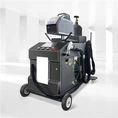
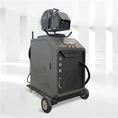
Equipment adaptation: Customized plateau-type fiber laser welding machines (6kW power) with bilingual operation interfaces and remote diagnostic systems.
Logistics scheme: Utilized the China-Nepal Railway for transportation, reaching Kathmandu in 72 hours, reducing freight costs by 20%.
Customs clearance optimization: Collaborated with local agents 3 months in advance to complete certifications, shortening customs clearance time to 48 hours.
After-sales guarantee: Established a spare parts warehouse in Pokhara and provided 7×24 technical support, increasing customer repurchase rate to 85%.