


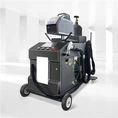
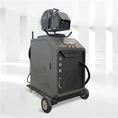

When using the laser welding machine's cutting function, pay attention to the following key points to ensure safety, cutting quality, and equipment longevity:
1. Check Device Compatibility
Function Support: Not all laser welders support cutting-verify if your machine has this mode and its power range (e.g., <500W may only cut thin sheets).
Optics Adjustment: Some systems require switching lenses or nozzles (e.g., welding uses a focusing lens, while cutting may need a longer focal length).
2. Optimize Cutting Parameters
Power & Speed: Cutting typically requires higher power and slower speeds than welding (e.g., 1mm stainless steel may need **1000W at 0.8m/min).
Assist Gas Selection:
Oxygen (O₂): Best for carbon steel (enhances cutting via oxidation).
Nitrogen (N₂): For stainless steel/aluminum (prevents oxidation, requires 15-20Bar pressure).
Compressed Air: Low-cost option for non-metals or low-precision cuts.
Focal Position: The focus is usually below the material surface (e.g., 1/3 of thickness).
3. Material & Thickness Limits
Suitable Materials: Metals (steel, aluminum, copper) work well, but highly reflective materials (e.g., copper, brass) risk damaging optics.
Thickness Capacity: Example for a 1000W fiber laser:
Carbon steel: ≤6mm
Stainless steel: ≤3mm
Aluminum: ≤2mm
Exceeding limits causes poor cuts or failure to penetrate.
4. Safety Precautions
Laser Safety Glasses: Use wavelength-specific goggles (e.g., 1060–1080nm for fiber lasers).
Ventilation & Dust Extraction: Cutting produces more fumes than welding-use a high-power exhaust system (≥3000m³/h).
Fire Prevention: Keep flammable materials away, especially when cutting plastics.
5. Workpiece & Fixturing
Flatness Requirement: Uneven surfaces cause defocusing (1mm deviation can increase kerf width by 20%).
Fixture Design: Use low-reflectivity clamps (e.g., ceramic) to avoid laser interference.
6. Maintenance
Lens Cleaning: Cutting generates more debris-clean lenses every 2 hours with alcohol and lint-free swabs.
Nozzle Inspection: Replace if the orifice is worn (e.g., from 0.8mm to 1.2mm).
7. Testing & Calibration
Trial Cuts: Test new materials with parameter gradients (start at 80% power).
Beam Alignment: Even 0.1mm misalignment can increase cut taper.
8. Cost Efficiency
Energy Consumption: Continuous cutting may use 50% more power than welding-balance speed and cost.
Troubleshooting Common Issues
Dross (Sticky Slag): Increase gas pressure or reduce speed.
Incomplete Cuts: Check focus position or laser power degradation (older lasers may lose 20% output).
-----------Victor Feng
Rayther Laser