


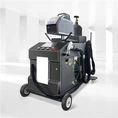
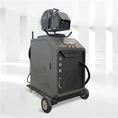

In the face of the surging wave of consumption upgrading, the modern furniture manufacturing industry is undergoing profound transformations. Consumers' demands for furniture quality, aesthetics, and personalized customization have skyrocketed. The limitations of traditional welding processes are becoming increasingly apparent, struggling to meet the ever-stricter production standards. Laser welding machines, with their remarkable advantages of high precision, high efficiency, and flexibility, have emerged as a key driving force for industry transformation and upgrading, injecting new vitality into the furniture manufacturing field.
High-Precision Welding: Redefining Furniture Quality Standards with Micron-Level Precision
Welding precision is a core indicator for measuring furniture quality, and laser welding machines stand out in the furniture manufacturing sector precisely because of their micron-level control precision. Traditional welding methods, such as arc welding, rely on manual operation or simple mechanical control. Affected by factors like heat diffusion and electrode rod jitter, it is often difficult to precisely control the weld width, prone to deviations of over 0.5 millimeters, resulting in rough connections and uneven gaps between components. Laser welding machines, however, use high-energy-density laser beams as the welding heat source. Through advanced beam focusing technology, they can concentrate energy on an extremely small area, stably controlling the weld width within 0.1 - 0.3 millimeters and achieving near "seamless" precision welding.
This high-precision advantage is vividly demonstrated in the manufacturing of high-end metal furniture. Take the metal dining chairs of an Italian luxury brand as an example. Their chair legs are made of thin-walled titanium alloy tubes with a diameter of only 8 millimeters. Traditional welding processes are highly likely to cause problems such as tube deformation and burn-through. By using laser welding machines, through precise adjustment of laser power and pulse frequency, welding can be completed in an instant while ensuring no thermal deformation of the tubes. Moreover, the welds are as smooth as a mirror, not only significantly enhancing the product's structural strength but also endowing the furniture with an artistic appearance. According to the production director of this brand, after introducing laser welding machines, the product quality inspection pass rate increased from 75% to 98%, and the repurchase rate in the high-end market rose by 30%.
Efficient Operation: Breaking Through Capacity Bottlenecks and Achieving Agile Production
Production efficiency is directly related to an enterprise's market response speed and economic benefits. Laser welding machines, with their "fast, accurate, and stable" operation characteristics, have completely transformed the production rhythm of the furniture manufacturing industry. Traditional welding processes require a long cycle of preheating, welding, and cooling.
For example, welding the frame of a metal dining table using arc welding takes at least 20 minutes, and during the process, it is necessary to frequently change electrodes and adjust welding parameters. In contrast, laser welding machines, with a welding speed of up to 10 meters per minute and combined with automated robotic arms, can complete the same workload in just 3 - 5 minutes, increasing efficiency by more than 4 times.
This high efficiency is even more pronounced in large-scale customized production. After a leading domestic furniture enterprise introduced an automated laser welding production line, by pre-entering the welding parameters of different furniture styles into the system, it can quickly switch between welding various components such as solid wood frames, metal drawer rails, and glass connectors on the same production line.
The daily production capacity increased from 800 pieces to 3,500 pieces, and the order delivery cycle was shortened from 15 days to 7 days, successfully seizing the explosive demand market during e-commerce promotion events. In addition, laser welding does not require filler materials, reducing the time spent on consumable replacement and waste, further enhancing overall production efficiency.
Flexibility: Unlocking Infinite Possibilities in Furniture Design
With the diversification of consumers' aesthetic demands, furniture design is accelerating its transition from standardization to personalization. Laser welding machines, with their "flexible manufacturing" features, have become a powerful tool for designers to realize their creativity. The CNC programming system they are equipped with supports the import of design files such as CAD and 3D models, enabling precise welding of complex trajectories such as curves, spirals, and irregular parts, breaking through the limitations of traditional welding processes that can only handle straight lines and simple broken lines.
In the "Liquid Metal" series of products by a cutting-edge furniture brand, designers used laser welding machines to weld ultra-thin stainless steel sheets with a thickness of only 0.8 millimeters into undulating curved chair backs. Through precise control of laser energy distribution, metal wrinkling and deformation were avoided, ultimately presenting an artistic effect resembling flowing metal.
What's more remarkable is the strong material compatibility of laser welding machines. In addition to common carbon steel and aluminum alloy, they can also weld titanium alloy, dissimilar metals such as copper and aluminum, and even metals and non-metals (such as metal and ceramics, glass). A German high-end cabinet brand innovatively applied laser welding to the connection of metal countertops and fireproof boards.
Through local instantaneous heating, a molecular-level bond was formed, ensuring the stability of the countertop while avoiding the formaldehyde release problem caused by traditional adhesive bonding, opening up a new path for environmentally friendly furniture manufacturing.
Intelligent Upgrades: Constructing a New Ecology for Furniture Manufacturing
With the deep integration of Industry 4.0 technologies, laser welding machines are evolving from single devices to intelligent production units. Laser welding equipment integrated with visual recognition systems can automatically detect workpiece position and dimensional deviations and adjust the welding path in real-time. When linked with the Internet of Things platform, enterprises can remotely monitor equipment operation status, predict failures, and achieve preventive maintenance.
A multinational furniture group, by deploying a laser welding smart factory, integrated production data into an AI analysis system. Based on historical orders and market trends, it automatically optimized welding parameters and production scheduling plans, reducing production energy consumption by 18% and increasing the overall equipment utilization rate to 92%.
In addition, the green attributes of laser welding technology are highly consistent with the sustainable development trend of the furniture industry. Its non-contact welding method is noise-free and has low radiation, generating very little waste residue and exhaust gas during the welding process. When combined with a dust purification system, clean production can be achieved. Driven by the "dual carbon" goals, more and more furniture enterprises are incorporating laser welding into their green manufacturing system certifications, further enhancing their brand competitiveness.
In conclusion, laser welding machines are redefining the quality standards, production models, and design boundaries of the furniture manufacturing industry with their disruptive technological advantages. In the current fiercely competitive market, mastering laser welding technology is not only the key for enterprises to reduce costs and increase efficiency but also a core weapon for seizing the high-end market and achieving differentiated competition. With the continuous iteration of technology, laser welding is expected to drive the furniture industry towards an intelligent, green, and artistic future at an accelerated pace.
--Rayther Laser Jack Sun--