


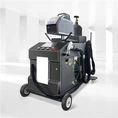


Laser welding machines are widely used in industrial welding due to their high precision and efficiency. As a key consumable in welding operations, the choice of welding wire directly affects welding quality and results. Different types of welding wires vary in composition, diameter, and material. When used with laser welding machines, they have different impacts on weld strength, welding efficiency, appearance quality, and other aspects.
The Impact of Welding Wire Material on Welding Performance
The material of the welding wire is one of the core factors determining welding results. Common types include carbon steel welding wires, stainless steel welding wires, and aluminum alloy welding wires. Carbon steel welding wires are low in cost and suitable for welding materials such as low-carbon steel. During laser welding, they can form a good fusion with the base material, and the weld strength can meet the requirements of general structural parts. However, their corrosion resistance is poor, and they are prone to rust in humid or corrosive environments.
Stainless steel welding wires contain alloying elements such as chromium and nickel. When used for laser welding, the welds have excellent corrosion resistance and oxidation resistance, making them suitable for scenarios with high corrosion resistance requirements such as chemical industry and food processing. However, the melting point of stainless steel welding wires is relatively high, requiring the laser welding machine to provide greater energy input; otherwise, incomplete fusion is likely to occur.
Aluminum alloy welding wires are lightweight and have good electrical conductivity, so they are frequently used in fields such as aerospace and automobile manufacturing. But aluminum alloy welding wires have high laser reflectivity, which will cause part of the laser energy to be lost. Therefore, it is necessary to precisely control the laser parameters to ensure welding quality. In addition, the welds are prone to porosity, which places higher requirements on the welding process.
The Impact of Welding Wire Diameter on Welding Efficiency and Precision
The diameter of the welding wire directly affects the welding efficiency and weld precision of the laser welding machine. Fine-diameter welding wires (such as those with a diameter of less than 0.8mm) melt quickly during welding and can form a more precise cooperation with the laser beam. They are suitable for welding thin-walled workpieces or precision parts. The weld width is narrow, the appearance is flat and smooth, and they can meet high-precision welding requirements. However, the filling amount of fine wires is limited, and for thick plate welding, multiple fillings are required, which will reduce welding efficiency.
Thick-diameter welding wires (such as those with a diameter of more than 1.2mm) have a larger filling amount, which can reduce the number of fillings in thick plate welding and significantly improve welding efficiency. However, thick wires require higher laser energy to melt. If the parameters are not controlled properly, phenomena such as incomplete melting of the wire are likely to occur, leading to defects such as inclusions and incomplete fusion in the weld. At the same time, the weld width is wider, which will affect the welding precision of precision components
.
The Impact of Welding Wire Composition on Weld Metallurgical Properties
The composition of the welding wire plays a decisive role in the metallurgical properties of the weld. When the welding wire contains deoxidizing elements such as manganese and silicon, it can effectively remove oxygen and nitrogen in the molten pool during laser welding, reduce the occurrence of defects such as porosity and slag inclusion, and improve the purity of the weld. For example, adding an appropriate amount of molybdenum to low-alloy steel welding wires can enhance the high-temperature strength and wear resistance of the weld.
If the composition of the welding wire does not match the base material, abnormal metallurgical reactions may occur. For instance, when using high-carbon steel welding wires to weld low-carbon steel, the high carbon content in the weld will increase the hardness and brittleness of the weld, making it prone to cracks. If the content of alloying elements in the welding wire is insufficient, the mechanical properties of the weld may be lower than those of the base material, affecting the load-bearing capacity of the overall structure.
The Impact of Flux-Cored Wires and Solid Wires on the Welding Process
Flux-cored wires contain flux inside. During laser welding, the flux decomposes to produce gas, forming a protective atmosphere to isolate the molten pool from air pollution. At the same time, the flux can also play a role in deoxidation and desulfurization, improving weld quality. In addition, the slag of flux-cored wires can cover the weld surface, slow down the cooling rate, reduce welding stress, and lower the risk of cracks. They are suitable for welding operations in outdoor or poorly ventilated environments.
Solid wires rely on external protective gases (such as argon and carbon dioxide) to prevent oxidation of the molten pool. They produce less smoke during the welding process, the weld formation is more beautiful, and the melting rate of the wire is stable, making them suitable for automated laser welding production lines. However, solid wires have high requirements for the purity of the protective gas. If the supply of protective gas is insufficient or the purity is not high enough, it will lead to problems such as porosity and oxidation in the weld.
In summary, different types of welding wires have significant impacts on laser welding operations in terms of welding performance, efficiency, metallurgical properties, and process stability. In actual welding operations, it is necessary to reasonably select the type of welding wire according to factors such as the base material, welding requirements, and operating environment to give full play to the advantages of the laser welding machine and ensure welding quality.
--Rayther Laser Jack Sun--