


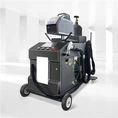
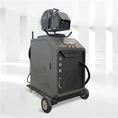

Here are the potential causes for a laser welding machine failing to weld properly, categorized for systematic troubleshooting:
1. Hardware Issues
Laser Source Problems
Power degradation (aging or cooling failure)
Damaged modules (fiber breakage, pump diode failure)
Unstable power supply (fluctuating laser output)
Optical System Faults
Contaminated/damaged focusing lens or protective window
Misaligned beam path (mechanical vibration or calibration error)
Fiber optic transmission loss (loose connectors or excessive bending)
Cooling System Failures
High coolant temperature (chiller malfunction or clogged pipes)
Insufficient water flow (pump failure or leaks)
2. Process Parameter Errors
Incorrect Settings
Mismatched power/pulse width/frequency (unsuitable for material thickness)
Wrong defocus distance (positive/negative focus error)
Shielding gas issues (wrong type/flow rate, e.g., insufficient argon causing oxidation)
Material-Related Factors
Surface contamination (oil, oxide layer not cleaned)
High-reflectivity materials (e.g., copper/aluminum without tailored waveforms)
Excessive joint gap (>0.2mm may prevent fusion)
3. Control System Failures
Software Glitches
Program errors (incorrect welding path/parameter import)
System freeze (requires software reboot)
Sensor Malfunctions
Height tracking sensor failure (causing focal length drift)
False temperature alerts (triggering unnecessary shutdowns)
4. Operational & Environmental Factors
External Interference
Power grid fluctuations (use a voltage stabilizer)
Ambient temperature extremes (beyond machine specs)
User Mistakes
Safety interlock active (e.g., protective door open)
Emergency stop button pressed accidentally
Common Fixes
Case 1: Excessive spatter on stainless steel
Reduce pulse frequency (e.g., 50Hz → 30Hz), increase argon flow to 15L/min
Case 2: Failure to initiate weld on aluminum
Switch to square-wave pulses, pre-clean surface with wire brush
Pro Tip: Maintain operation logs for technician diagnostics. Persistent issues may require manufacturer-assisted recalibration or laser source inspection.
For non-English speaking technicians, visual aids like error code charts or video demonstrations can bridge language gaps during troubleshooting.
------Victor Feng
Rayther Laser