


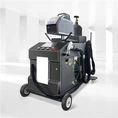
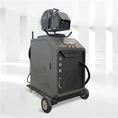

Laser Cutting
Laser cutting utilizes a high - intensity laser beam to melt, burn, or vaporize materials. One of its significant advantages is its high precision. It can achieve extremely fine cuts, with kerf widths often as narrow as 0.1 - 0.5 mm, making it ideal for intricate designs in industries such as electronics and jewelry. Additionally, laser cutting is non - contact, which means there is no physical force applied to the material, reducing the risk of deformation. It can process a wide range of materials, including metals, plastics, and wood, without the need for frequent tool changes.
Plasma Cutting
Plasma cutting works by creating a high - velocity jet of ionized gas (plasma) that melts and blows away the material. This method is highly efficient when cutting thick metals, such as steel plates up to several inches in thickness. Plasma cutting is faster than many traditional cutting methods for conductive materials and offers relatively good edge quality. It is also more cost - effective compared to laser cutting for thick metal work, as the equipment and operating costs are generally lower.
Waterjet Cutting
Waterjet cutting uses a high - pressure stream of water, sometimes mixed with abrasive particles, to cut through materials. It is a cold cutting process, meaning there is no heat - affected zone on the material. This makes it suitable for heat - sensitive materials like certain plastics, rubber, and some composites. Waterjet cutting can handle a diverse range of materials, from soft foam to hard stone, and provides smooth cut surfaces with minimal burrs. It also allows for complex shapes to be cut without the need for additional finishing operations in many cases.
CNC Machining Cutting
Computer Numerical Control (CNC) machining cutting encompasses various cutting techniques, such as milling, turning, and drilling, all controlled by computer programs. The main advantage of CNC machining is its high level of automation and repeatability. Once the program is set up, it can produce identical parts with consistent quality repeatedly. It offers great flexibility in terms of the types of cuts and shapes that can be achieved, and is suitable for both prototype development and mass production. CNC machining can work with a wide variety of materials, including metals, ceramics, and polymers, and can perform multiple operations on a single workpiece in a single setup.
In conclusion, each cutting method has its unique advantages, and the choice of a particular method depends on factors such as the type of material, the required precision, production volume, and cost - effectiveness.
---Brian---