


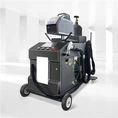
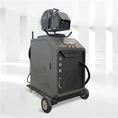
Advantages of Continuous Wave (CW) Lasers in Laser Welding
In the field of laser welding, Continuous Wave (CW) lasers offer several key advantages over pulsed lasers, particularly in high-speed, deep-penetration, and industrial-scale applications. Here are the main benefits:
1. High Welding Speed & Efficiency
Uninterrupted energy output: CW lasers provide a stable beam without pauses, enabling continuous high-speed welding (e.g., several meters per minute).
No pulse delay: Unlike pulsed lasers, CW lasers eliminate waiting time between pulses, maximizing production efficiency.
Typical applications: Automotive body welding, pipeline seam welding.
2. Deep Penetration Welding (Keyhole Effect)
High power density: CW lasers (typically ≥1 kW) can generate a stable keyhole, allowing deep and narrow welds (up to 10+ mm in steel).
Better for thick materials: Single-pass welding of thick metals (5–20 mm) without multi-layer stacking.
Pulsed laser limitation: Pulsed lasers struggle to maintain a stable keyhole due to intermittent energy delivery.
3. Superior Weld Consistency
Stable heat input: Continuous energy reduces thermal fluctuations, minimizing defects like porosity and cracks.
Smoother weld surface: The continuous melt pool flow improves surface finish, especially on reflective metals (e.g., aluminum, copper).
4. Lower Operational Costs
Simpler system design: No need for complex pulse modulation, reducing maintenance efforts.
Higher energy efficiency: CW lasers (e.g., fiber lasers) achieve better electro-optical conversion (30–50%), lowering power consumption.
5. Ideal for Industrial Mass Production
Easy automation integration: Compatible with robots and CNC systems for high-throughput production (e.g., automotive welding at 50+ spots/minute).
Mature process control: Well-established parameter settings (power, speed) for repeatable, high-quality welds.
6. Specialized Advantages
Better for reflective metals: Beam oscillation techniques improve absorption on copper and aluminum.
Remote welding capability: Works with scanning optics for long-distance (1–2 m) welding without repositioning.
Key Applications
1. Automotive: Body-in-white welding, battery trays.
2. Oil/Gas Pipelines: Longitudinal seam welding.
3. Heavy Machinery: Thick steel structures (ships, cranes).
4. Consumer Goods: Stainless steel appliances, sealed enclosures.
Conclusion
CW lasers excel in speed, penetration depth, and cost-efficiency, making them the preferred choice for high-volume industrial welding. However, for ultra-thin materials (<0.5 mm) or heat-sensitive precision welding, pulsed lasers remain more suitable.
-------Victor Feng
Rayther Laser