



1. Fiber Lasers
Overview:
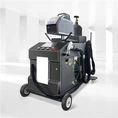
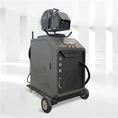
Fiber lasers use optical fibers doped with rare-earth elements (such as ytterbium) as the laser medium. The beam is delivered through a flexible optical fiber, making the system compact and efficient.
Applications:
Widely used in metal processing, including cutting, welding, drilling, and engraving.
Suitable for materials such as carbon steel, stainless steel, aluminum, and brass.
Advantages:
High energy efficiency
Low maintenance
Excellent beam quality
Long service life
2. CO₂ Lasers
Overview:
CO₂ lasers generate infrared light (10.6 μm) using a gas mixture of carbon dioxide, nitrogen, and helium. These lasers are particularly well-absorbed by non-metallic materials.
Applications:
Non-metal cutting and engraving, including wood, acrylic, plastic, leather, fabric, glass, and paper.
Widely used in packaging, signage, textile, and craft industries.
Advantages:
Smooth cutting edges
High processing speed for organic materials
Cost-effective for non-metallic applications
3. Semiconductor Lasers (Diode Lasers)
Overview:
Semiconductor or diode lasers are compact solid-state lasers that emit light through a p-n junction in semiconductor material.
Applications:
Commonly used in laser marking, low-power welding, barcode scanners, and consumer electronics.
Also used in some medical devices and sensors.
Advantages:
Small size and lightweight
High electrical-to-optical efficiency
Instant on/off capability
4. Solid-State Lasers (Nd:YAG)
Overview:
Nd:YAG (neodymium-doped yttrium aluminum garnet) lasers use a crystal as the gain medium and produce light typically at 1064 nm.
Applications:
Found in industrial welding, drilling, medical surgery, and beauty treatments (e.g., laser hair removal).
Can be used in both pulsed and continuous modes.
Advantages:
High peak power
Capable of deep penetration welding
Flexible beam delivery via fiber optics
5. Green and Blue Lasers
Overview:
Green lasers (532 nm) and blue lasers (450–488 nm) operate at shorter wavelengths than infrared lasers. These wavelengths are better absorbed by high-reflectivity materials such as copper and gold.
Applications:
Processing of high-reflective materials, including copper, aluminum, and precious metals
Widely used in electronics, battery manufacturing, solar energy, and precision micro-welding.
Advantages:
Excellent absorption for difficult-to-process metals
Reduced spatter and defects during welding
High precision and minimal heat-affected zone
Conclusion
Each type of laser has its own characteristics, making it ideal for specific applications. While fiber lasers dominate in metalworking, CO₂ lasers remain crucial for non-metallic materials. Diode and solid-state lasers offer flexibility in marking and welding, and green/blue lasers are increasingly important in advanced sectors like electronics and new energy. Selecting the right laser depends on the material, processing requirements, and desired results.
- Rayther Laser Lyra Zhang