


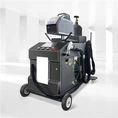
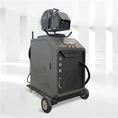

The automobile industry is a highly integrated sector that relies on cutting-edge technologies to enhance production efficiency, safety, and performance. Among these technologies, fiber laser welding and cutting systems have become indispensable in automotive manufacturing. Due to their precision, speed, and adaptability, fiber laser machines are widely used in vehicle production, enabling high automation and large-scale processing while maintaining superior quality.
To meet the demands of mass production and smart manufacturing, high-power, multi-channel laser welding systems have become the industry standard. These systems offer several key advantages:
Advantages of Fiber Laser Welding in Automotive Manufacturing
- High Flexibility & Efficiency – The welding head can be operated manually or integrated into robotic arms, significantly improving production speed.
- Superior Weld Quality – Continuous wave output ensures dense, high-strength welds with minimal defects.
- Fast Processing & Low Thermal Distortion – Laser heat is highly concentrated, enabling rapid welding with minimal heat-affected zones, reducing material warping.
- Non-Contact Welding – Since the energy comes from the laser beam, there is no physical force applied to the workpiece, eliminating mechanical stress. Additionally, laser welding is unaffected by electromagnetic interference, making it ideal for sensitive electronic components.
Key Applications in Automobile Production
1. Car Body Welding
- Used for assembling stamped body panels such as roofs, trunk lids, and frames.
- Critical for structural welding, including doors, side panels, and pillars, where high strength is required.
- Replaces traditional resistance spot welding in hard-to-reach areas, improving durability and crash resistance.
2. Welding of Different Thickness Plates
- Enables the joining of uneven-thickness metal sheets, reducing vehicle weight while maintaining structural integrity.
- Lowers the number of required components, simplifying assembly and improving fuel efficiency.
3. Gears & Transmission Components
- Used for welding gearbox parts, drive shafts, and transmission assemblies, ensuring high precision and durability.
- Provides stronger joints compared to conventional welding methods, enhancing vehicle performance and longevity.
Future Trends in Automotive Laser Welding
As the automotive industry shifts toward lightweight materials (e.g., aluminum, carbon fiber composites) and electric vehicle (EV) manufacturing, fiber laser welding will play an even more critical role. The development of higher-power lasers (10kW+) and AI-driven automation will further optimize production efficiency, making laser welding a cornerstone of next-generation automobile manufacturing.
By adopting fiber laser technology, automakers can achieve faster production cycles, higher precision, and stronger welds, ensuring safer and more reliable vehicles for the future.If you would like to learn more, please contact us at rayther@raytherlasercutter.com.
--Rayther Laser Allen Wang