


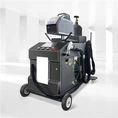
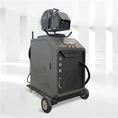

Laser Cutting Machines: The "Precision Tailors" of Modern Industry
In modern manufacturing, laser cutting machines, leveraging the advantage of non-contact cutting, have become core equipment for automotive body sheet metal processing, aerospace titanium alloy component fabrication, and precision circuit board cutting in electronic devices. Whether in automotive factories where production lines complete 3-5 parts per minute, or in the aerospace field for high-precision processing of complex curved components, laser cutting machines need to stably deliver precise performance.
In this process, the reducer, as a key link connecting the motor and the cutting execution mechanism, silently supports the equipment's leap from "being able to cut" to "cutting precisely, quickly, and stably, and serves as a core component ensuring the application of laser cutting technology in industrial scenarios.
Unveiling the Reducer: A Deep Dive into Its Working Principle
To achieve efficient power output, the motor of a laser cutting machine typically operates at a high speed of thousands of revolutions per minute. However, the cutting head actually requires stable power with low speed and high torque-and the reducer is the core of this power conversion. It achieves power adaptation through internal precision transmission structures: Gear reducers rely on the meshing of gears with different numbers of teeth to convert the high-speed rotation of the motor into the low-speed movement required by the cutting head while amplifying torque;
Worm gear reducers, through the vertical meshing of worms and worm gears, not only achieve speed reduction but also have a self-locking function to prevent the cutting head from shifting due to external forces; Planetary gear reducers, with a structure where multiple planetary gears rotate around a sun gear, achieve a high reduction ratio in a compact volume, making them suitable for the space requirements of small laser cutting machines. Through these structures, the reducer converts the "high-speed, low-force" output of the motor into "low-speed, high-force" for the cutting head, ensuring precise and controllable cutting actions.
Cutting Precision: The Difference Lies in Millimeters
Industrial manufacturing has extremely strict requirements for laser cutting precision. For example, the cutting error of mobile phone middle frames must be controlled within 0.01-0.03mm, and the cutting error of the sealing surface of automotive engine blocks must not exceed 0.05mm-any deviation beyond these ranges will result in part scrapping.
The reducer is the key to maintaining this precision: When the cutting head moves along the preset path, the reducer can offset the slight vibration during motor operation through a stable transmission ratio, preventing the cutting head from "jittering" or "shifting". For instance, in the cutting of stainless steel thin plates, a laser cutting machine equipped with a high-precision planetary gear reducer can achieve a cutting path error of no more than 0.02mm over a continuous 10-meter distance, far better than the 0.1mm error of equipment without a reducer or with an ordinary reducer. This directly determines whether the parts can meet assembly precision requirements.
Cutting Speed: The Secret Behind High Efficiency
The efficiency of laser cutting depends not only on laser power but also on the speed control of the cutting head-and the reducer is the "commander" of speed regulation. When dealing with different materials, the cutting speed must be accurately matched: When cutting 2mm-thick low-carbon steel, the speed needs to be controlled at 1.5-2m/min to ensure a smooth cut; when cutting 5mm-thick aluminum alloy, the speed must be reduced to 0.8-1m/min to avoid slag formation.
The reducer can adjust the transmission speed in real-time according to instructions from the numerical control system, preventing incomplete cutting due to excessive speed and avoiding reduced production efficiency due to insufficient speed. Data shows that compared with traditional fixed-speed equipment, laser cutting machines equipped with intelligent speed-regulating reducers can increase overall cutting efficiency by 15%-20% in mixed-material processing scenarios, while reducing the scrap rate from 5% to less than 1%, significantly lowering production costs.
Equipment Lifespan: A Silent Guardian
Core components of laser cutting machines, such as motors and guide rails, operate at high speeds for long periods. If they directly bear high loads, they are prone to wear and aging. The reducer "reduces the burden" on key components by bearing part of the torque output by the motor: The motor does not need to directly drive the heavy cutting head; instead, power is smoothly transmitted through the reducer, reducing the impact load during motor start-up and shutdown.
At the same time, the reducer can filter out high-frequency vibrations during motor operation, preventing vibrations from being transmitted to the guide rails and slowing down the wear rate of the guide rails. In practical applications, for laser cutting machines equipped with high-quality reducers, the average replacement cycle of motors can be extended from 2 years to 4-5 years, and the maintenance interval of guide rails can be extended from 3 months to 6 months. The average service life of the entire equipment can be extended by 2-3 years compared with equipment without a reducer, greatly reducing equipment maintenance costs.
Stability and Reliability: The Cornerstone of Cutting Operations
In industrial production, laser cutting machines often need to operate continuously for 24 hours, and equipment stability directly affects production progress. The reducer reduces vibration and noise during equipment operation through its precision transmission structure: Its internal gears undergo high-frequency quenching and precision grinding, with the meshing gap controlled within 0.005-0.01mm, so the vibration amplitude during operation can be reduced to less than 0.1mm, far lower than the 0.5mm vibration amplitude of ordinary transmission components.
At the same time, the enclosed housing design can effectively isolate transmission noise, reducing the equipment's operating noise from 85 decibels to below 65 decibels and improving the workshop working environment. More importantly, stable transmission can reduce failures such as cutting head deviation and motor overload caused by vibration. Data shows that laser cutting machines equipped with high-quality reducers can reduce the continuous operation failure rate by 30%, reducing production losses caused by equipment downtime by approximately 100,000-150,000 yuan per year.
Selection and Maintenance: The Key to Utilizing Reducers Effectively
The selection of a reducer must be accurately matched to the actual needs of the laser cutting machine: For high-power heavy-duty laser cutting machines (capable of cutting materials over 20mm thick), worm gear reducers with high torque should be selected; for high-speed precision laser cutting machines (such as those used in electronic part processing), planetary gear reducers should be prioritized to ensure precision; for small portable laser cutting machines, harmonic reducers with compact volume should be considered.
In daily maintenance, special lubricating oil must be regularly added to the reducer, and the oil level and oil quality should be checked every 500 operating hours to avoid gear wear due to insufficient lubrication. At the same time, the gear meshing condition should be inspected by disassembly every 1000 operating hours, and worn parts should be replaced in a timely manner-these operations can extend the service life of the reducer by 50% and prevent the entire laser cutting machine from shutting down due to reducer failures.
Industry Outlook: Unlimited Possibilities for the Future
As laser cutting technology moves towards "higher precision, greater power, and more intelligence," reducers are also undergoing simultaneous upgrades. On one hand, to adapt to the cutting of micro-parts (such as 0.1mm thin tubes in medical equipment), reducers are developing towards miniaturization, with their volume reduced to 1/3 of traditional products while maintaining a transmission precision of 0.001mm.
On the other hand, intelligent reducers have begun to integrate sensors, which can real-time monitor data such as speed, temperature, and vibration, and realize adaptive adjustment through the numerical control system. For example, when cutting materials with high hardness, they can automatically increase torque output to avoid gear overload. In the future, with the advancement of Industry 4.0, reducers will also integrate with the Internet of Things (IoT) technology to achieve remote fault early warning and predictive maintenance, further improving the intelligence level of laser cutting machines and promoting their application breakthroughs in high-end fields such as semiconductor manufacturing and new energy batteries.
--Rayther Laser Jack Sun--