


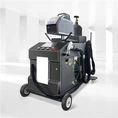
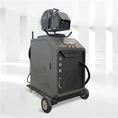

1. Handheld Laser Welding
Key Features:
Portable and easy to operate
Highly flexible for different workpiece shapes
Requires minimal setup time
Suitable for various welding positions and angles
Best for:
Small to medium-sized enterprises (SMEs)
On-site repairs and maintenance
Customized or irregular part welding
Handheld laser welding machines allow the operator to manually guide the laser torch along the weld seam. This method is ideal when flexibility and mobility are required.
2. Automatic Track-Based Laser Welding
Key Features:
Welds are guided by pre-set tracks
Delivers high consistency and repeatability
Reduces human error
Can be semi-automated or fully automated
Best for:
Batch welding of similar parts
Mid-volume production
Applications where consistent quality is critical
In this mode, the laser head moves along a mechanical or programmed track, ensuring stable welding speed and position, which improves seam quality.
3. Robotic Laser Welding
Key Features:
Integrates with industrial robots and automation systems
High precision and welding speed
Supports complex multi-axis movements
Easily programmable for different tasks
Best for:
Mass production and standardized parts
Automotive, electronics, and high-end manufacturing
Smart factory and Industry 4.0 environments
Robotic laser welding maximizes efficiency and ensures repeatability in large-scale production. It also allows for minimal human intervention.
Conclusion
Each operating mode has its own advantages:
Handheld: Best for flexibility and low-volume jobs
Automatic track-based: Ideal for consistent, repeatable work
Robotic: Perfect for high-speed, high-precision mass production
By understanding the strengths of each mode, businesses can select the most appropriate welding solution for their specific production needs.
--Rayther Laser Lyra Zhang