


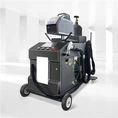
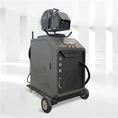

During the laser welding process, protective gases not only isolate the molten pool from contamination by impurities such as oxygen and nitrogen in the air but also influence the forming quality, cooling rate, and metallurgical reactions of the weld seam. Due to the differences in the physical and chemical properties of various protective gases, they play unique roles when welding different materials. The following is an analysis of the common protective gases used in laser welding machines and their core functions.
1. Argon: Stable Protection of Universal Protective Gas
Gas Characteristics
Argon (Ar) is a colorless and odorless inert gas with a relatively low ionization energy and a density greater than that of air. It easily forms a stable protective layer during welding.
Core Functions
Isolate Air and Prevent Oxidation: Argon can effectively isolate the molten pool from oxygen and water vapor in the atmosphere, preventing metals from reacting with oxygen at high temperatures to form oxides (such as aluminum oxide and copper oxide). It is especially suitable for welding active metals like aluminum, magnesium, and copper.
Stabilize the Arc and Improve Forming: Its low ionization energy makes argon more easily ionized under the action of a laser, forming a stable plasma cloud, reducing spatter, refining the molten pool, and improving the smoothness of the weld seam surface.
Regulate the Cooling Rate: Argon has a relatively low thermal conductivity, which can slow down the cooling rate of the molten pool, promote uniform crystallization of the weld metal, and reduce the risk of cracking.
Typical Applications
Welding of aluminum alloy doors and windows, packaging of copper electronic components, processing of magnesium alloy automotive parts, etc.
2. Nitrogen: Anti-oxidation Choice for Stainless Steel Welding
Gas Characteristics
Nitrogen (N2) is the most abundant gas in the air, with relatively stable chemical properties and low cost. However, it may react with some metals at high temperatures.
Core Functions
Inhibit Oxidation and Refine Grains: In the welding of stainless steel, nitrogen can inhibit the combination of chromium with oxygen to form Cr2O3, prevent the formation of a black oxide film on the weld surface, and refine the grains through solid solution strengthening, improving the corrosion resistance of the weld seam.
Control the Fluidity of the Molten Pool: The density and thermal conductivity of nitrogen are between those of argon and helium, which can moderately regulate the flow state of the molten pool and prevent poor forming caused by excessive flow of the molten pool.
Economic Advantage: Compared with argon and helium, nitrogen is cheaper, making it suitable for scenarios where high surface quality of the weld seam is required but extreme protection is not necessary (such as the welding of ordinary stainless steel structural parts).
Precautions
Nitrogen is not suitable for metals like titanium and aluminum that easily form hard and brittle nitrides. Otherwise, it will increase the brittleness of the weld seam.
Typical Applications
Welding of stainless steel kitchenware, manufacturing of pressure vessels, connection of steel structure bridges, etc.
3. Helium: High-energy Assistant for Efficient Welding
Gas Characteristics
Helium (He) is an inert gas with the lowest density and the highest thermal conductivity. It has a high ionization energy and hardly reacts with any metals at high temperatures.
Core Functions
Efficiently Disperse the Plasma Cloud: Its high ionization energy makes the plasma cloud generated by helium under the action of a laser thinner, reducing the attenuation of laser energy. It is suitable for deep penetration welding (such as thick plate welding) and high-speed welding scenarios.
Accelerate Heat Dissipation and Control Penetration Depth: Its high thermal conductivity can quickly take away the heat of the molten pool, avoid local overheating, and precisely control the penetration depth of the weld seam, especially suitable for welding thin-walled materials (such as foils and precision electronic components).
Ultra-pure Protection and Adaptability to Harsh Environments: Helium has extremely strong chemical inertness, which can provide a contamination-free welding environment for highly active metals such as titanium and zirconium, ensuring the reliability of the weld seam under harsh conditions such as high temperature and high pressure.
Disadvantages
Helium is expensive and has a low density. It requires high-flow purging to form an effective protective layer. It is usually used in a mixture with other gases to balance performance and cost.
Typical Applications
Welding of titanium alloy components in aerospace, packaging of microelectronic chips, welding of zirconium alloy pipes in the nuclear industry, etc.
4. Gas Mixtures: Synergistic Effects of Customized Protection
To meet different welding requirements, gas mixtures composed of two or more gases are often used in actual production. They achieve the best protection effect through complementary advantages. The common gas mixtures and their functions are as follows:
1. Argon-Helium Mixture (Ar+He)
Function: Combining the stable arc characteristics of argon with the high thermal conductivity of helium, it can not only reduce the shielding effect of the plasma on the laser but also improve the fluidity of the molten pool. It is suitable for the thick plate welding of high-reflectivity metals such as copper and aluminum.
Typical Proportions: 70% Ar + 30% He (balancing cost and performance) or 50% Ar + 50% He (strengthening penetration depth control).
2. Argon-Nitrogen Mixture (Ar+N2)
Function: In the welding of stainless steel, a small amount of nitrogen (5%-15%) can inhibit oxidation and increase the hardness of the weld seam. At the same time, the stable protection of argon can avoid the spatter problem caused by pure nitrogen.
Note: The proportion of nitrogen needs to be strictly controlled to prevent excessive formation of nitrides.
3. Argon-Carbon Dioxide Mixture (Ar+CO2)
Function: The addition of CO2 can enhance the arc heat input, promote droplet transfer, improve the wettability of the molten pool during carbon steel welding, and reduce lack-of-fusion defects. It is commonly used in laser-MIG hybrid welding processes.
5. How to Select the Appropriate Protective Gas?
Material Characteristics: Select inert gases (argon, helium) or neutral gases (nitrogen) according to the properties of the base metal (such as activity, melting point, and thermal conductivity) to avoid harmful metallurgical reactions (such as nitridation and oxidation).
Welding Process: For deep penetration welding, give priority to helium or gas mixtures with a high proportion of helium (to reduce plasma shielding). For thin plate high-speed welding, argon or gas mixtures with a low proportion of helium can be used (to control the cooling of the molten pool).
Cost-effectiveness: For ordinary carbon steel and stainless steel welding, nitrogen or argon-nitrogen mixtures can be selected; for high-end metals such as aluminum and titanium, pure argon or argon-helium mixtures are preferred.
Equipment Adaptability: Consider the gas flow control accuracy of the welding machine and the nozzle design (such as whether high-flow purging of helium is required) to ensure that the protective gas evenly covers the molten pool.
Conclusion
Protective gases are the "invisible guardians" of the laser welding process. Their selection directly affects the quality of the weld seam, production efficiency, and cost. From the utilization of the characteristics of single gases to the synergistic effects of gas mixtures, comprehensive considerations should be made in combination with material properties, welding parameters, and actual working conditions. With the development of laser welding technology towards high precision and automation, the refined application of protective gases will become a key factor in enhancing the reliability of welding.
--Rayther Laser Jack Sun--