


1. Ultra-High Power and Thick Plate Cutting Technology Breakthroughs
Technological Breakthroughs: Domestic 100kW-class fiber lasers have achieved mass production (led by Raycus Laser), with a year-on-year increase of 30.56% in the shipment of 10kW+ lasers, enabling cutting of steel plates over 50mm thick. Ultrafast lasers (picosecond/femtosecond-level) have entered the attosecond range (10⁻¹⁸ seconds), achieving ±0.1μm precision in semiconductor wafer cutting.

Application Scenarios:
New Energy Vehicles: CATL has adopted Hans Laser equipment, boosting the welding yield of battery trays to 99.5%.
Aerospace: GE Aviation collaborates with BLT to reduce the cost of laser-additive manufactured titanium alloy components by 40%.
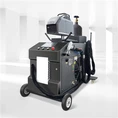
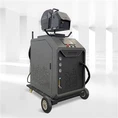
Suggested Images: Industrial site photo of a 10kW laser cutting a 50mm-thick steel plate; microscopic diagram of ultrafast laser performing nanoscale cutting on a semiconductor wafer.
2. Intelligent and Automated Processing Systems
Technological Breakthroughs: AI-driven adaptive processing systems (e.g., JPT's intelligent spectral detection) can adjust laser parameters in real time, increasing processing efficiency by over 30%. The Laser-as-a-Service (LaaS) model reduces user capital expenditure by 70%.
Application Scenarios:
Automotive Manufacturing: HG Tech's technology enables laser welding of vehicle bodies in just 43 seconds per unit, holding a 90% domestic market share.
Medical Health: AI-assisted diagnostic systems enhance the precision of laser ablation, with over 100,000 annual surgeries.
Suggested Images: Screenshot of an AI algorithm adjusting laser parameters in real time; working scene of automated laser welding robots in an automotive production line.
3. Green Manufacturing and Sustainable Technology
Technological Breakthroughs: Fiber lasers reduce energy consumption by 30% compared to traditional CO₂ lasers, gradually replacing high-pollution chemical cleaning processes. Laser cleaning technology removes rust and paint from metal surfaces without chemical residues, applied in aircraft skin maintenance.
Application Scenarios:
Hydrogen Industry: HG Tech's GW-level alkaline electrolyzer fully automated production line achieves welding deformation ≤1mm, with an annual output of 1 million bipolar plates.
Photovoltaic Industry: Laser cleaning of solar panels increases photoelectric conversion efficiency by 5%-10%.
Suggested Images: Real-life photo of laser cleaning equipment operating on an aircraft skin; panoramic photo of a hydrogen electrolyzer production line.
4. New Materials and High-Precision Processing Capabilities
Technological Breakthroughs: HG Tech launched China's first high-end wafer laser cutting equipment with 100% localized core components, increasing cutting efficiency by 5x compared to traditional blade wheels and reducing the heat-affected zone to zero. Hans Semiconductor's OLED flexible large-panel laser cutting equipment handles 1500mm×925mm substrates with ±0.02mm precision.
Application Scenarios:
Semiconductor: The yield of third-generation semiconductor wafer cutting has increased to 99%, with Huawei and SMIC accelerating the adoption of domestic equipment.
Consumer Electronics: Laser,note: "stealth cutting") technology is used for smartphone frame processing, achieving ±0.02mm precision.
Suggested Images: Physical photo of HG Tech's wafer laser cutting equipment; microscopic structure diagram of Hans Semiconductor's OLED cutting equipment.
5. Cross-Industry Integration and Emerging Market Expansion
Technological Breakthroughs: The cost of LiDAR has dropped to $200 per unit (Lumentum VCSEL technology), with the global market expected to reach $5.35 billion by 2029. Laser display technologies (e.g., Micro LED) are driving the next-generation display revolution.
Application Scenarios:
Autonomous Driving: LiDAR enables 360° environmental perception, with automakers like Tesla and NIO accelerating deployment.
Emerging Markets: Domestic enterprises such as Hongshan Laser have set up factories in North America and India to avoid trade barriers, with Southeast Asian markets growing at over 25% annually.
Suggested Images: Road-test photo of an autonomous vehicle equipped with LiDAR; microscopic structure diagram of a Micro LED display.
6. Policy Support and Accelerated Domestic Substitution
Technological Breakthroughs: China's "14th Five-Year Plan" lists lasers as a core field of intelligent manufacturing, with the localization rate of high-power fiber lasers rising from 10% in 2018 to 45% in 2023. Hubei Province's laser industry output reaches 23.5-25 billion RMB, the only region with positive growth nationwide.
Application Scenarios:
Policy Drivers: High-tech enterprises enjoy a reduced corporate tax rate of 15%, with Hans Laser and HG Tech benefiting from R&D tax incentives.
Regional Economy: The Yangtze River Delta and Pearl River Delta have formed laser industry clusters covering the entire chain from optical chips to equipment manufacturing and application services.
Suggested Images: Screenshot of policy documents on laser technology from China's "14th Five-Year Plan"; layout diagram of a laser industrial park in the Yangtze River Delta.
10kW Laser Cutting Scene: Showcase the impact of industrial thick-plate processing.
AI-Enhanced Laser System: Demonstrate collaborative operations between smart algorithms and equipment.
Hydrogen Electrolyzer Production Line: Highlight the combination of green manufacturing and efficiency.
Semiconductor Wafer Cutting: Emphasize breakthroughs in precision technology.
LiDAR-Equipped Autonomous Vehicle: Depict the intelligent future of transportation.
-------------------
Ryder