


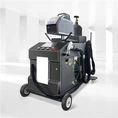
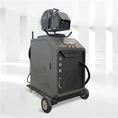
Laser cutting machines have revolutionized modern manufacturing by providing high-precision, efficient, and versatile cutting solutions for various materials, including metals, plastics, wood, and composites. The quality of laser cutting is crucial for ensuring smooth edges, minimal kerf width, high dimensional accuracy, and reduced post-processing requirements. However, several factors influence the cutting quality, ranging from machine parameters to material properties and environmental conditions.

This article explores the key factors affecting the cutting quality of laser cutting machines, including:
- Laser Power and Beam Characteristics
- Cutting Speed
- Material Properties
- Assist Gas Type and Pressure
- Nozzle Design and Standoff Distance
- Focus Position and Beam Quality
- Machine Stability and Motion Control
- Environmental and Operational Conditions
- Software and Control Systems
Understanding these factors helps optimize laser cutting processes for superior results.
1. Laser Power and Beam Characteristics
1.1 Laser Power
The power of the laser source directly influences cutting efficiency and quality. Higher power allows for faster cutting speeds and the ability to process thicker materials. However, excessive power can lead to excessive melting, wider kerf, and poor edge quality. Conversely, insufficient power may result in incomplete cuts or excessive dross formation.
- Low Power (e.g., < 500W): Suitable for thin materials (e.g., plastics, thin metals) but may struggle with thicker sheets.
- Medium Power (500W–2000W): Ideal for general-purpose cutting of metals (e.g., stainless steel, aluminum).
- High Power (>2000W): Used for thick metals and high-speed cutting but requires precise control to avoid overheating.
1.2 Beam Quality (M² Factor)
The beam quality, measured by the M² factor, determines how well the laser beam can be focused. A lower M² value (closer to 1) indicates a high-quality beam with a tight focus, leading to finer cuts and better edge quality. Poor beam quality results in a larger spot size, reducing precision.
- Single-mode fiber lasers (M² ≈ 1.1): Excellent for fine cutting.
- Multimode lasers (M² > 1.5): Better for thicker materials but with slightly reduced edge quality.
1.3 Wavelength
Different laser types (CO₂, fiber, Nd:YAG) emit different wavelengths, affecting material absorption:
- CO₂ lasers (10.6 µm): Best for non-metals (plastics, wood) and some metals.
- Fiber lasers (1.06 µm): More efficient for metals due to higher absorption rates.
2. Cutting Speed
The cutting speed must be optimized for the material thickness and laser power:
- Too slow: Excessive heat buildup leads to wider kerf, melting, and rough edges.
- Too fast: Incomplete cuts, striations, and poor edge smoothness.
Optimal speed depends on:
- Material type and thickness
- Laser power
- Assist gas pressure
A balance must be struck to achieve clean cuts without excessive dross.
3. Material Properties
3.1 Material Type
- Metals (steel, aluminum, copper): Require high power and assist gas (e.g., oxygen, nitrogen).
- Plastics: May melt or burn if not properly controlled (e.g., acrylic cuts cleanly, while PVC releases toxic fumes).
- Wood and composites: Prone to charring; require optimized power and speed.
3.2 Thickness
Thicker materials require higher power and slower speeds but may still produce rougher edges compared to thin sheets.
3.3 Reflectivity and Thermal Conductivity
- Highly reflective materials (copper, aluminum): Reflect laser energy, requiring higher power and specialized settings.
- High thermal conductivity (aluminum): Dissipates heat quickly, making cutting more challenging.
4. Assist Gas Type and Pressure
Assist gases help eject molten material and improve cut quality:
- Oxygen (O₂): Supports exothermic reactions for faster cutting of carbon steel but may oxidize edges.
- Nitrogen (N₂): Provides clean, oxide-free cuts for stainless steel and aluminum.
- Compressed air: Cost-effective for non-metal cutting but less effective for thick metals.
Gas pressure must be optimized:
- Too low: Inadequate material ejection, leading to dross.
- Too high: Can disturb the melt pool, causing irregularities.
5. Nozzle Design and Standoff Distance
5.1 Nozzle Diameter
- Small nozzle (1–1.5 mm): Better for fine cuts but requires precise alignment.
- Large nozzle (2–3 mm): Suitable for thicker materials but may reduce precision.
5.2 Standoff Distance (Nozzle-to-Workpiece Gap)
- Too close: Risk of collisions and back-reflections.
- Too far: Reduced gas pressure effectiveness, leading to poor cut quality.
- Optimal distance: Typically 0.5–2 mm, depending on material and nozzle type.
6. Focus Position and Beam Quality
6.1 Focal Point Position
The laser beam must be focused precisely on the material surface:
- At the surface: Best for thin materials.
- Below the surface: Helps with thicker cuts by increasing energy penetration.
- Above the surface: Used for specific applications like engraving.
6.2 Beam Focus Quality
A well-collimated beam with a small spot size improves precision. Misalignment or lens contamination can degrade focus quality.
7. Machine Stability and Motion Control
- Mechanical Rigidity: Vibration or backlash in the machine leads to wavy cuts.
- Linear Guides and Servo Motors: High-precision motion systems ensure smooth movement.
- Acceleration and Deceleration: Jerky movements cause irregularities in cut edges.
8. Environmental and Operational Conditions
- Temperature and Humidity: Affect laser performance, especially for CO₂ lasers.
- Dust and Contaminants: Can damage optics and reduce beam quality.
- Cooling System Efficiency: Prevents overheating of the laser source.
9. Software and Control Systems
- CAD/CAM Software: Ensures accurate path planning and nesting.
- Real-time Monitoring: Detects and corrects deviations during cutting.
- Pulse Frequency Control: Adjusts laser pulses for different materials.
Conclusion
The cutting quality of laser machines depends on multiple interrelated factors, including laser power, speed, material properties, assist gas, nozzle design, focus position, machine stability, and software control. Optimizing these parameters ensures high precision, smooth edges, and efficient production. Manufacturers must conduct thorough testing and calibration to achieve the best results for different materials and applications.
By understanding and controlling these factors, businesses can enhance productivity, reduce waste, and improve the overall quality of laser-cut products.
If you want to know more about our products, please contact us rayther@raytherlasercutter.com
----Allen Wang