


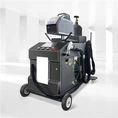
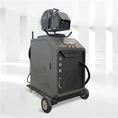

In modern manufacturing, pipes are core materials for construction, automotive, aerospace, and other sectors. Their processing accuracy and efficiency directly impact the quality of end products. Traditional pipe processing relies on mechanical methods such as sawing, punching, and milling, which not only result in rough cuts, tedious procedures, and material waste but also struggle to meet the demands of complex shaped pipe fittings. The emergence of laser pipe cutting machines, using "light" as a blade, has completely broken the limitations of traditional processing and become a key equipment driving pipe processing toward "high precision, high efficiency, and high flexibility."
I. Laser Pipe Cutting Machine: Achieving Precise Pipe Cutting with "Light"
Essentially, a laser pipe cutting machine uses a high-energy-density laser beam that focuses on the pipe surface to instantly melt, vaporize, or strip the material. It works with the rotation and movement of the pipe to cut pipes of different materials and specifications. Its core working principle can be broken down into three key steps:
- Laser Generation and Focusing: A laser (e.g., fiber laser, CO₂ laser) produces a laser with stable wavelength. The optical system transmits it to a focusing lens, which compresses the laser beam into a micron-level spot, increasing the energy density to a level sufficient to quickly exceed the pipe's melting point.
- Pipe Positioning and Motion Control: Equipped with a high-precision CNC system and clamping-rotating mechanism, the machine enables axial movement, 360° rotation, and radial fine adjustment of the pipe. This ensures the laser beam accurately aligns with the cutting path. Even for curved, conical, or other special-shaped pipes, multi-axis linkage allows for complex trajectory cutting.
- Auxiliary Gas Function: Different auxiliary gases are selected based on pipe materials (e.g., oxygen for combustion-aided cutting of carbon steel, nitrogen for anti-oxidation of stainless steel). These gases not only accelerate material removal but also protect the cut surface from oxidation and dross, improving cutting quality.
Compared with traditional mechanical processing, the core advantage of laser pipe cutting machines lies in "non-contact processing"-the laser beam has no physical friction with the pipe, avoiding tool wear, pipe deformation, and other issues, thus fundamentally ensuring processing accuracy and consistency.
II. Four Core Advantages: Redefining Pipe Processing Efficiency and Quality
In practical production, the advantages of laser pipe cutting machines have become crucial for manufacturing enterprises to reduce costs and improve efficiency, mainly reflected in four aspects:
- Higher Precision: Meeting High-Precision Manufacturing Needs
Laser pipe cutting machines offer high cutting precision and small perpendicularity errors for cuts. The cuts are burr-free and free of edge collapse, eliminating the need for subsequent secondary processing like grinding and polishing. For example, in automotive exhaust pipe processing, traditional sawing causes ovality deviations at the pipe mouth, requiring additional correction. In contrast, laser pipe cutting achieves flat cuts in one go, directly meeting welding and assembly requirements and significantly reducing procedures.
- Faster Efficiency: Breaking the Bottleneck of Mass Production
Compared with traditional sawing, laser pipe cutting machines operate much faster and do not require frequent tool replacement. Meanwhile, they support "continuous processing of multiple pipe fittings." Through preset cutting programs in the CNC system, they can automatically complete the entire process of pipe loading, positioning, cutting, and unloading, enabling 24/7 unmanned production and effectively breaking the bottleneck of mass production.
- Greater Flexibility: Meeting Complex Processing Requirements
Laser pipe cutting machines do not require mold replacement. By adjusting cutting parameters and paths in the CNC system, they can achieve various processing forms such as round holes, square holes, slotted holes, special-shaped grooves, bevel cuts, and groove processing. For instance, in the steel structure construction field, traditional processing requires separate punching molds for connecting plates of different hole diameters, which is costly and time-consuming. Laser pipe cutting machines, however, can quickly switch cutting patterns on the same pipe according to design drawings, flexibly adapting to customized needs.
- Lower Loss: Reducing Material and Operating Costs
Traditional mechanical cutting leads to certain cut losses. For high-value pipes, the cost of material waste in long-term mass production is considerable. Laser pipe cutting has a narrow cut width, significantly improving material utilization. Additionally, laser pipe cutting machines have no tool wear, saving tool replacement costs, and have a long maintenance cycle, further reducing operating costs.
III. Main Application Fields: Covering from Basic Industry to High-End Manufacturing
Laser pipe cutting machines have strong adaptability. They can process various metal pipes (carbon steel, stainless steel, aluminum alloy, copper alloy, titanium alloy, etc.) and non-metallic pipes (PVC, acrylic, etc.), and are widely used in six core fields:
- Automotive Manufacturing: Used for cutting and groove processing of exhaust pipes, frame pipes, and fuel tank connecting pipes, meeting the high-precision requirements for lightweight automotive designs (e.g., application of aluminum alloy pipes).
- Steel Structure and Construction: Processing scaffold pipes, curtain wall support pipes, and steel structure node connecting plates, enabling efficient processing of complex holes and special-shaped cuts.
- Medical Equipment: Producing metal catheters for surgical instruments (e.g., laparoscope catheters) and pipe frames for rehabilitation equipment. High-precision cutting ensures the safety and adaptability of medical devices.
- Furniture and Home Furnishings: Processing stainless steel coffee table brackets, aluminum alloy wardrobe hanging rods, and wrought iron railings, supporting the rapid implementation of personalized designs.
- Aerospace: For hard-to-process material pipes (titanium alloy, high-temperature alloy, etc.), it completes precision cutting of engine pipelines and airframe frame pipes, meeting the strict standards for material strength and processing precision in aerospace.
- Agricultural and Construction Machinery: Cutting frame pipes for agricultural machinery and hydraulic pipelines for excavators. It adapts to the impact resistance requirements of outdoor operation equipment, with no stress concentration at the cuts.
IV. Industry Development Trends: Intelligence, Large-Scale, and Multi-Function Integration
As manufacturing advances toward "Industry 4.0," laser pipe cutting machines are constantly evolving, showing three main development directions:
- Intelligent Upgrade: Integrating AI visual recognition systems, which can automatically identify pipe diameter, wall thickness, and curvature, and adjust cutting parameters in real time to avoid processing errors caused by pipe tolerances. They also support connection with MES production management systems to realize full-process traceability of orders, production, and quality inspection data.
- Large-Scale and Wide-Range Design: For large-diameter pipes in wind power, chemical, and other fields, laser pipe cutting machines with large-span frames and high-power lasers are developed to meet the processing needs of large engineering pipe fittings.
- Multi-Function Integration: Integrating cutting, grooving, punching, and engraving functions. For example, some machines can complete groove processing while cutting pipes, directly meeting welding pre-treatment requirements and further shortening the production process.
V. Selection Suggestions: Matching Core Parameters with Needs
When selecting a laser pipe cutting machine, enterprises should focus on three core parameters to avoid blind choices:
- Laser Power: Medium-low power lasers are suitable for thin-walled pipes, while high-power lasers are recommended for thick-walled pipes. Although high-power lasers cost more, they improve the cutting efficiency of thick-walled pipes.
- Pipe Specification Adaptability: Confirm the machine's supported pipe diameter range, length, and whether it can process special-shaped pipes (e.g., square pipes, rectangular pipes, oval pipes).
- Automation Configuration: For mass production, machines with automatic loading, unloading, and sorting functions are recommended. For small-batch customized production, semi-automatic machines are suitable to balance cost and efficiency.
From a "blunt tool" in traditional mechanical processing to a "sharp blade" with laser technology, laser pipe cutting machines have not only changed the process mode of pipe processing but also become an important driver of manufacturing upgrading. With continuous technological iteration, they will play a role in more high-end manufacturing fields, create higher production value for enterprises, and promote the pipe processing industry toward a more precise, efficient, and flexible future.
--Rayther Laser Jack Sun--