


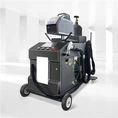


How to Select the Appropriate Welding Wire for Laser Welding Machines
In the laser welding process, the selection of welding wire is of great importance. It directly affects the welding quality, weld properties, and production efficiency. The following are the key points for selecting the appropriate welding wire.
I. Consider the Base Metal Material
The type of base metal is the basis for choosing the welding wire. For carbon steel, a carbon steel welding wire with a similar composition can generally be selected, such as the ER70 - S series of welding wires, which can ensure a good match in strength and chemical properties between the weld and the base metal. For stainless - steel base metals, corresponding stainless - steel welding wires are required. For example, for 304 stainless - steel base metals, ER308 welding wires are usually used to ensure corrosion resistance and other properties. For aluminum and aluminum - alloy base metals, according to their alloy series, such as 6061 aluminum alloy, ER5356 and other welding wires should be selected to ensure the strength and corrosion resistance of the welded joint.
II. Pay Attention to the Requirements for Weld Properties
1. Strength
If the welded structure requires high strength, a welding wire with an appropriate alloy element content and a matching strength level should be selected. For example, in the welding of structural parts that bear large tensile forces, it is necessary to ensure that the tensile strength of the welding wire meets the design requirements.
2. Corrosion Resistance
For welded parts that work in a corrosive environment, the corrosion resistance of the welding wire is crucial. In marine environments or the chemical industry, welding wires with high contents of corrosion - resistant elements such as chromium and nickel need to be selected to enhance the corrosion resistance of the weld.
3. Electrical Conductivity
In some welding scenarios where electrical conductivity is required, such as the welding of electrical equipment, a welding wire that can ensure good electrical conductivity should be selected to avoid affecting the performance of the equipment due to excessive weld resistance.
III. Diameter Specifications of the Welding Wire
The diameter of the welding wire needs to match the equipment parameters of the laser welding machine. Thin welding wires (such as 0.8mm) are suitable for thin - plate welding or situations where strict control of heat input to the weld is required, which can reduce welding deformation. Thick welding wires (such as 1.2mm or thicker) are often used for thick - plate welding, which can improve welding efficiency. However, attention should be paid to controlling the heat input during welding to prevent excessive deformation and defects.
IV. Quality and Impurity Content of the Welding Wire
High - quality welding wires should have a low impurity content, especially harmful elements such as sulfur and phosphorus, which will reduce the toughness and crack resistance of the weld. Select welding wires with a smooth surface and no rust, oil pollution, or other contaminants to ensure a stable welding process and reduce the occurrence of welding defects such as porosity and slag inclusions.
V. Welding Process and Equipment Characteristics
Different laser welding machines have their specific operating parameters and performance characteristics. Some welding machines have high requirements for the wire - feeding stability of the welding wire, so a welding wire with good process performance and smooth wire - feeding should be selected. At the same time, welding processes such as pulsed laser welding and continuous laser welding will also affect the selection of welding wires. During pulsed laser welding, the melting characteristics of the welding wire need to be adapted to parameters such as pulse frequency and energy to ensure a beautiful weld formation and stable quality.
In conclusion, selecting the appropriate welding wire for a laser welding machine requires comprehensive consideration of multiple factors. Only in this way can the advantages of laser welding be fully utilized to achieve high - quality and high - efficiency welding operations.
--Jack Sun--