


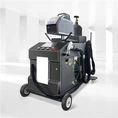
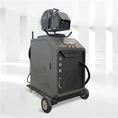

In modern manufacturing, laser welding technology is widely used due to its high efficiency and precision. The wire feeding system, as a crucial component of laser welding, directly affects the welding quality and efficiency. Currently, the common wire feeding methods are single wire feeding and double wire feeding. Each method has its own characteristics and is suitable for different welding scenarios. Next, we will explore their advantages and disadvantages from multiple dimensions.
I. Overview of Wire Feeding Principles
A. Principle of Single Wire Feeding
The single wire feeding system uses only one welding wire for welding filler. During the welding process, the single wire is fed into the welding pool at a constant or adjustable speed through the wire feeding mechanism. The wire melts under the action of the laser heat source, fills the weld seam, and realizes the connection of materials. Its working principle is relatively simple, and wire feeding control is also relatively easy. It is a basic and widely used wire feeding method.
B. Principle of Double Wire Feeding
The double wire feeding system is equipped with two welding wires, which can be of the same material or different materials. During welding, two independent wire feeding mechanisms can respectively control parameters such as the wire feeding speed and angle of the two wires. By precisely adjusting the melting ratio and filling position of the two wires, more complex welding processes can be achieved to meet diversified welding requirements.
II. Comparison of Welding Efficiency
A. Efficiency Characteristics of Single Wire Feeding
The single wire feeding system has a relatively simple structure and a single wire feeding process. In some welding tasks with low requirements for welding speed and narrow weld seams, it can stably complete the welding work. However, since only one wire is used for filling, when dealing with welding of thick materials and wide weld seams, multiple fillings and weldings are required, resulting in lower overall welding efficiency. For example, when welding metal plates with a thickness of more than 10 millimeters, a single wire feeding laser welding machine needs to weld multiple layers repeatedly to fill the weld seam, which takes a long time.
B. Efficiency Advantages of Double Wire Feeding
The double wire feeding system significantly increases the deposition rate and welding speed by feeding two wires simultaneously. Especially in the welding of thick materials and wide weld seams, double wire feeding can fill more metal materials at one time, reducing the number of welding layers and times. When welding large - scale steel structures, a double wire feeding laser welding machine can save about 30% - 50% of the welding time compared with single wire feeding equipment, greatly improving production efficiency. It is especially suitable for large - scale industrial production scenarios.
III. Differences in Weld Quality
A. Weld Quality of Single Wire Feeding
Due to the single wire feeding parameters, single wire feeding is easier to achieve precise control during the welding process. For the welding of thin - walled parts with high requirements for weld formation and strict requirements for welding precision, it can ensure the uniformity and aesthetics of the weld seam. However, when facing complex working conditions, such as uneven material composition and complex welding joint forms, it is difficult for single wire feeding to improve the weld performance by adjusting the filler material, and quality problems such as insufficient weld strength and cracks are likely to occur.
B. Weld Advantages of Double Wire Feeding
The double wire feeding system can select different materials of wires according to welding requirements. By adjusting the wire feeding ratio of the two wires, the chemical composition and performance of the weld seam can be flexibly controlled. When welding dissimilar metals, one wire can be used to ensure the strength of the weld seam, and the other wire can be used to improve the toughness of the weld seam, effectively improving the comprehensive performance of the weld seam. At the same time, the collaborative effect of the two wires can better control the shape of the weld pool and the solidification process, reducing the occurrence of defects such as pores and slag inclusions and improving the weld quality. However, if the wire feeding parameters are not adjusted properly, it may also lead to uneven melting of the two wires, affecting the formation quality of the weld seam.
IV. Equipment Cost and Maintenance
A. Cost and Maintenance of Single Wire Feeding
The single wire feeding system has a simple structure and fewer components, so the equipment procurement cost is relatively low. The maintenance of its wire feeding mechanism and control system is also relatively convenient. Daily maintenance mainly focuses on the replacement of vulnerable parts such as wire feeding wheels and conduits, and the maintenance cost is low. It is suitable for small - scale enterprises or production scenarios with strict cost control.
B. Cost and Maintenance Challenges of Double Wire Feeding
Due to the double wire feeding system being equipped with two sets of wire feeding mechanisms and a more complex control system, the equipment price is usually 30% - 50% higher than that of the single wire feeding system. During use, the maintenance difficulty of the double wire feeding equipment is relatively high. It is necessary to debug and maintain the two sets of wire feeding systems at the same time, which requires a high level of technical proficiency from operators. Moreover, once one of the wire feeding mechanisms fails, it may affect the entire welding process, resulting in increased maintenance costs and downtime.
V. Analysis of Applicable Scenarios
A. Application Scenarios of Single Wire Feeding
Single wire feeding laser welding machines are suitable for precision welding fields with high requirements for welding precision and narrow weld seams, such as electronic component welding and jewelry processing. In these scenarios, the requirements for the aesthetics of the weld seam and welding precision are extremely high, and single wire feeding can meet the production requirements with its stable wire feeding control. In addition, for some small - scale production and enterprises sensitive to costs, the low investment and easy maintenance of single wire feeding equipment are also important factors for their choice.
B. Application Scenarios of Double Wire Feeding
The double wire feeding system is mainly applied to the welding of large - scale structural parts, thick - plate welding, and the welding of dissimilar metals. In scenarios such as the welding of vehicle body frames in the automotive manufacturing industry and the welding of large - scale components in the aerospace field, double wire feeding laser welding machines can give full play to their high - efficiency and high - quality welding advantages to meet the high - strength and high - reliability welding requirements. At the same time, in special welding tasks that require adjusting the weld composition to improve performance, the double wire feeding system also plays an irreplaceable role.
In conclusion, both single and double wire feeding methods in laser welding machines have their own advantages and disadvantages. When choosing, enterprises need to comprehensively consider factors such as the specific requirements of the welding task, production scale, and cost budget, weigh the pros and cons, and make the most suitable decision to achieve the best welding effect and economic benefits.
--Rayther Laser Jack Sun--