



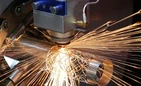

For engineers, fabricators, and operations managers, the challenge is constant: how to join stainless steel components without the warping, discoloration, and reduced corrosion resistance that plague conventional methods. The solution is laser welding stainless steel, a transformative technology that delivers unparalleled speed, precision, and quality that traditional TIG and MIG welding cannot match.
Laser welding uses a highly concentrated beam of light to melt and fuse stainless steel with minimal, controlled heat input. This precision-driven process directly solves the core problems of heat distortion and weld volume.

Key Benefits of Laser Welding Stainless Steel:
Exceptional Speed: Operates 4 to 10 times faster than TIG welding, dramatically increasing productivity and throughput.
Minimal Distortion: The focused heat creates a very small Heat-Affected Zone (HAZ), which drastically reduces or eliminates warping, preserving the part's dimensional accuracy.
Superior Quality: Produces clean, strong, and aesthetically pleasing welds that require little to no post-weld grinding or finishing.
Preserved Material Properties: The low heat input maintains the stainless steel's inherent strength and critical corrosion resistance, preventing issues like "weld decay".
This guide provides the expert knowledge needed to move from basic understanding to confident application, ensuring you can leverage the full potential of this advanced manufacturing technique.
Laser Weldingvs. Traditional Methods: A Head-to-Head Comparison
Choosing the right welding process is critical for project success. Here's how laser welding stacks up against TIG and MIG for stainless steel applications.
Laser Welding vs. TIG Welding
Tungsten Inert Gas (TIG) welding is known for high-quality, manual welds but struggles to keep pace in a production environment.
Speed & Productivity: Laser welding is significantly faster, making it the clear choice for automated and high-volume manufacturing.
Heat & Distortion: The TIG arc is an inefficient, diffuse heat source that creates a large HAZ, leading to considerable distortion, especially on thin sheet metal. The laser's focused beam prevents this widespread heat damage.
Automation: Laser systems are inherently easier to automate, enabling high-volume, repeatable production with less required manual skill than TIG.
Laser Welding vs. MIG Welding
Metal Inert Gas (MIG) welding is a versatile, high-deposition process, but it lacks the precision of a laser.
Precision & Quality: Laser welding is a non-contact process that produces clean, spatter-free welds. MIG welding is prone to spatter that requires post-weld cleanup.
Gap Tolerance: MIG welding is more forgiving of poor joint fit-up because its consumable wire acts as a filler. Laser welding demands precise alignment and tight tolerances.
Material Thickness: While high-power lasers can handle thick sections, MIG is often more practical for very heavy plate. Laser welding excels on thin to moderate material thicknesses where distortion control is critical.
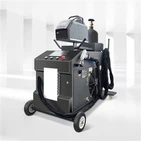
If you want to learn more about laser welding, or want to buy the best laser welding machine for you, please leave a message on our website and email us directly!
Contact us: