


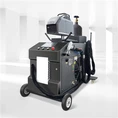
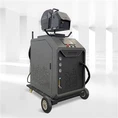

When using the cleaning function of a laser welding machine, the following key points should be considered to ensure safety, efficiency, and cleaning quality:
1. Safety Precautions
Personal Protection: Wear laser safety goggles (matched to the cleaning wavelength), dust masks, gloves, and protective clothing to avoid laser reflections or debris.
Work Area Safety: Ensure the workspace is free of flammable materials and mark restricted zones to prevent accidental exposure.
2. Parameter Settings & Calibration
Material-Specific Settings: Adjust laser power (20-100W), pulse frequency (1-100kHz), scanning speed, and spot size based on material type (e.g., stainless steel, aluminum, copper).
Highly reflective materials (e.g., copper) may require higher peak power or pulsed modulation.
Oxide layers may need lower frequency but higher energy density.
Test Run: Perform a trial on scrap material to verify cleaning effectiveness and avoid substrate damage.
3. Material Compatibility
Heat-Sensitive Materials: Thin coatings or plastic substrates may deform under laser heat-use lower power or alternative cleaning methods.
Surface Contaminants: Oils or heavy rust may affect laser absorption; pre-clean if necessary.
4. Equipment Maintenance
Optics Care: Regularly clean lenses and galvanometer scanners with lint-free cloths and optical-grade solvents to maintain beam quality.
Cooling System: Monitor water chiller flow rate (≥4L/min) and temperature (<25°C) to prevent laser overheating.
5. Process Monitoring
Real-Time Observation: Use a CCD camera or protective viewing window to check cleaning uniformity.
Quality Check: Ensure complete removal of oxides without excessive roughness (target Ra <1.6µm for welding).
6. Environmental Controls
Fume Extraction: Use ventilation or HEPA filters to remove metal/coating particles.
Toxic Emissions: Filter hazardous fumes (e.g., from zinc or paint coatings) according to safety regulations.
7. Special Cases
Reflective Surfaces: Adjust laser angle (30°–60°) or use short pulses (nanosecond/picosecond) to minimize reflections.
Complex Geometries: Modify focal length or use 3D scanning heads for hard-to-reach areas.
8. Compliance & Documentation
Standards: Follow ANSI Z136.1, IEC 60825, or local laser safety guidelines.
Record Keeping: Log parameters, material batches, and results for process optimization.
Key Takeaway: Laser cleaning requires precise parameter tuning and strict safety measures. Always conduct a risk assessment and test settings on non-critical samples before full-scale operation.
--------Victor Feng
Rayther Laser