


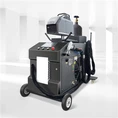
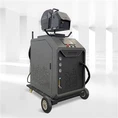

1. Fiber Laser
How it works: Uses optical fibers doped with rare-earth elements (like ytterbium) to generate and amplify laser light.
Advantages:
High energy efficiency
Compact and low-maintenance
Excellent beam quality and stability
Long service life
Best for:
Cutting and welding metals (e.g. stainless steel, aluminum, brass)
Laser marking and engraving
Automotive and aerospace parts
2. CO₂ Laser
How it works: Uses a gas mixture (carbon dioxide, nitrogen, helium) to produce infrared laser light.
Advantages:
Good for cutting non-metals (wood, plastic, acrylic, leather)
Smooth cutting edges
Affordable for large-format cutting
Limitations:
Not effective on reflective metals like copper and aluminum
Best for:
Sign-making
Packaging and textiles
Acrylic and plywood cutting
3. Diode Laser
How it works: Directly emits laser light from semiconductor diodes (like in laser pointers or small welding tools).
Advantages:
Very compact and efficient
Cost-effective
Suitable for small-scale and handheld devices
Limitations:
Limited power output
Lower beam quality compared to fiber lasers
Best for:
Low-power welding
Medical therapy devices
Consumer electronics
4. Solid-State Laser (e.g. Nd:YAG)
How it works: Uses a solid crystal as the laser medium (usually Neodymium-doped YAG).
Advantages:
High peak power
Can operate in pulsed or continuous modes
Suitable for fine drilling and engraving
Limitations:
Requires regular maintenance
Lower efficiency than fiber lasers
Best for:
Jewelry engraving
Precision machining
Some laser medical applications
Conclusion
Choosing the right laser source depends on your application:
Fiber lasers are best for metal cutting and welding
CO₂ lasers work well on non-metal materials
Diode lasers are ideal for compact, low-power tasks
Solid-state lasers are used for precision engraving and drilling
Understanding laser source types helps users select the right machine and avoid costly mismatches.
--Rayther Laser Lyra Zhang