


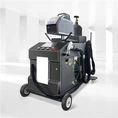
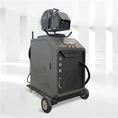
1. Excellent Beam Quality
The focused spot of the fiber laser cutting machine is extremely small, enabling precise cutting lines and high-precision processing. This feature is particularly advantageous for cutting precision components, such as electronic parts and intricate mechanical components, ensuring dimensional and geometric accuracy. It significantly enhances work efficiency and processing quality, making it ideal for industries with strict precision requirements, such as aerospace component manufacturing.
2. High Cutting Speed
Under the same power conditions, the cutting speed of fiber laser cutting machines can be twice that of CO₂ laser cutters. For example, when cutting 10mm thick carbon steel, fiber lasers complete the task in a much shorter time, greatly improving production efficiency. In large-scale sheet metal processing, this high-speed capability quickly meets mass production demands, shortens lead times, and boosts overall output capacity.

3. Stable Performance
Equipped with high-quality imported fiber lasers, these machines offer reliable and stable performance. Key components have a service life of up to 100,000 hours, ensuring consistent operation during long-term continuous production. Even in high-intensity industrial environments, such as the continuous cutting of automotive parts, they minimize production interruptions caused by equipment failures, supporting uninterrupted manufacturing.
4. High Electro-Optical Conversion Efficiency
Fiber laser cutters achieve an electro-optical conversion efficiency of approximately 30%, three times higher than CO₂ lasers. This efficiency results in lower energy consumption: a 1000W fiber laser cutter can save significant electricity costs annually compared to a CO₂ laser of the same power. Aligned with global green manufacturing trends, this energy-saving feature reduces operational costs and promotes sustainable development.
5. Simple Maintenance and Low Cost
Fiber laser cutters eliminate the need for laser working gases and use fiber optic transmission instead of complex mirror systems, drastically reducing maintenance steps and costs. Protective lenses in the cutting head minimize wear and tear on consumables like focusing lenses. In practical applications, routine maintenance only involves checking fiber connections and lens conditions, requiring no specialized optical alignment, thus lowering labor and maintenance expenses.
6. High Cutting Precision
With an extremely narrow kerf (up to 0.1mm) and minimal heat-affected zones, workpiece deformation during cutting is negligible. The cut edges are smooth and burr-free, with a surface roughness (Ra) of ≤6.5. For precision instrument enclosures, this precision ensures parts meet assembly requirements directly, often eliminating the need for secondary processing and saving time and costs.
7. Simple and Stable Optical Path
The entire optical path is transmitted through fiber optics, eliminating the need for complex mirror-guided systems. This streamlined design ensures stable, maintenance-free external optics, reducing tedious alignment procedures. Even after equipment movement or long-term use, the optical path remains stable, minimizing risks of quality degradation and ensuring consistent cutting performance-critical for long-term batch production, such as in advertising signage manufacturing.
8. Strong Flexible Processing Capability
Compact and lightweight, fiber laser cutters easily integrate with robots or multi-axis worktables for 3D cutting and other flexible processing tasks. For example, in automotive manufacturing, they can collaborate with robots to cut complex body components. Fiber beam splitting also enables "one laser for multiple machines," facilitating functional expansion. This flexibility adapts quickly to diverse part requirements, enhancing a company's responsiveness to customized orders.
9. Good Material Adaptability
While primarily designed for metal materials (carbon steel, stainless steel, aluminum alloy, copper, etc.), they excel in cutting medium and thin plates. By adjusting processes like fusion cutting or oxidation cutting, cutting quality can be optimized. For instance, nitrogen-assisted cutting prevents oxidation in stainless steel, while high-power fiber lasers enable rapid fusion cutting of aluminum alloys, meeting the demands of aerospace aluminum component processing.
-------------------------
Ryder