


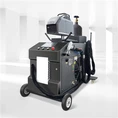
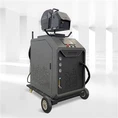
Precautions for Using Laser Welding Machines
To ensure safety, weld quality, and equipment longevity, follow these key precautions when operating a laser welding machine:
1. Safety Measures
-Laser Radiation Protection
Wear laser safety goggles (matched to the laser wavelength, e.g., 1064nm for fiber lasers).
Use protective barriers or warning signs to prevent accidental exposure.
- Hazardous Fumes/Dust
Some materials (e.g., galvanized steel, plastics) release toxic fumes-use local exhaust ventilation (LEV) or fume extractors.
- Fire Prevention
Keep flammable materials away; have **fire extinguishers (CO₂ type)** nearby
2. Operating Guidelines
- Parameter Adjustment
Set power (e.g., 500W–1kW for thin stainless steel), pulse frequency, and defocus distance based on material thickness/type.
Conduct test welds before processing actual workpieces.
- Beam Alignment
Regularly check focusing lenses for contamination/misalignment (beam deviation ≤0.1mm).
- Cooling System:
Maintain chiller temperature (20–25°C) to prevent laser power loss.
3. Material & Process Compatibility
- Highly Reflective Metals (Cu, Al)
Use green/blue lasers or surface roughening to reduce reflectivity.
- Dissimilar Metals (e.g., Steel-Aluminum):
Adjust heat input bias toward the higher-melting-point material.
- Thin Sheets (<1mm):
Apply low power + high speed (e.g., 300W at 5m/min) to avoid burn-through.
4. Environment & Maintenance
- Workspace Conditions
Keep the area dry (humidity <60%), dust-free, and vibration-free.
- Routine Maintenance:
Clean lenses daily (with anhydrous ethanol + lint-free swabs).
Lubricate linear guides monthly and calibrate laser output.
5. Troubleshooting Common Issues
- Porosity in Welds:
Check shielding gas purity (≥99.99% argon) and flow rate (15–20L/min).
- Spatter:
Reduce power, switch to pulse mode, or clean material surfaces.
- Equipment Alarms
Immediately stop and inspect for **cooling failures, power issues, or optic damage.
6. Special Applications
- Automated / Robot Welding:
Optimize robot paths to avoid laser head collisions.
- Micro Welding (Electronics):
Use CCD vision systems for micron-level alignment.
Key Takeaways
1. Safety First – Never bypass protective measures.
2. Process Optimization – Match parameters to material properties.
3. Preventive Maintenance – Reduces downtime and costly repairs.
For new users, undergo **supplier training** and refer to:
-----Mr. Victor Feng