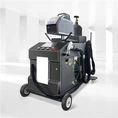
Laser cutting has significant advantages over traditional cutting processes (such as plasma cutting and CNC punching) in terms of precision, efficiency, and material adaptability, as detailed below:
Laser cutting achieves an accuracy of ±0.05mm with a kerf width of only 0.1–0.3mm and a heat-affected zone of ≤0.5mm. The edges are smooth and burr-free, requiring no secondary processing before assembly or surface treatment (e.g., electroplating, painting)-ideal for precision parts. In contrast, plasma cutting has an accuracy of about ±0.2mm, a wider kerf (0.5–1mm), and a larger heat-affected zone, prone to beveling in thick plates with rough edges needing grinding. CNC punching relies on mold precision, leaving burrs on the edges; complex shapes require multi-mold splicing, resulting in lower accuracy and potential deformation in thin plates.
Laser cutting far exceeds traditional processes in speed. For example, a 6,000W fiber laser cuts 10mm carbon steel at ~1.5m/min, while plasma cutting manages only 0.8m/min, and CNC punching is slower due to sequential hole stamping. Additionally, laser cutting eliminates the need for molds, directly processing any complex shape (arcs, hollow designs, special parts) via CNC programming-perfect for small-batch, multi-variety customized production. Plasma cutting is limited by torch movement precision for complex shapes, while CNC punching requires frequent mold changes, making it unsuitable for flexible orders.
Laser cutting boasts extensive material compatibility: it cuts metals like carbon steel, stainless steel, aluminum, copper, and titanium alloys (0.1mm–30mm+ thickness), non-metals such as acrylic, wood, fabric, leather, and plastics, and even coated plates/composites (e.g., aluminum-plastic panels) without damaging surface coatings. Plasma cutting mainly suits carbon steel and stainless steel, performs poorly on aluminum/alloys (typically <20mm thickness), and causes non-metal carbonization. CNC punching is limited to thin steel plates (<3mm), risks mold damage for thick plates, and cannot process non-metals.
Laser cutting consumes mainly cutting heads and lenses, with replacement cycles of 6 months to 1 year, and energy consumption ~1/3 that of plasma-no need for compressed air systems in punching, reducing overall costs. Plasma cutting requires frequent electrode/nozzle replacements (weekly to monthly), while CNC punching molds wear quickly, incurring higher consumable and maintenance costs. Moreover, laser cutting's high automation allows one operator to manage multiple machines, significantly lowering labor costs compared to CNC punching's manual loading/unloading and mold changes.
Laser cutting is a thermal process without mechanical noise; with a smoke exhaust system, it reduces dust emissions, outperforming plasma cutting (arc light, fumes, and noise) and CNC punching (stamping noise >90dB, harmful to workers' long-term health).
Laser cutting: Suited for high-precision, complex shapes, multi-material (metal/non-metal), and small-batch customized production (e.g., kitchenware, auto parts, advertising signs).
Plasma cutting: Ideal for rough processing of thick plates (>10mm) like carbon steel in steel structures or shipbuilding, where precision is less critical.
CNC punching: Fits high-volume, regular-shape thin steel plate processing (e.g., home appliance casings, distribution boxes) but requires pre-made molds.
------------
Ryder