


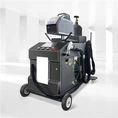
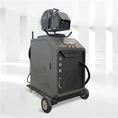

In modern manufacturing, laser cutting machines have become indispensable processing equipment in numerous industries due to their remarkable advantages such as high precision, efficiency, and flexibility. Ranging from automotive manufacturing and aerospace to electronic device production, laser cutting machines are widely used for cutting various materials, including metals, plastics, and wood. Behind the efficient and stable operation of laser cutting machines, servo motors play a pivotal role.
I. Working Principles and Characteristics of Servo Motors
(A) Working Principles
A servo motor is a motor system capable of precisely controlling the operation of mechanical components. It consists of a motor body, a driver, and a feedback device (such as an encoder). Its operation is based on the principle of closed-loop control: when the control circuit sends a command signal, the driver receives it and converts it into an electric current to drive the motor. The motor body generates torque according to the current, driving the load to move. Meanwhile, the feedback device continuously monitors information such as the motor's position and speed and sends this data back to the driver.
The driver adjusts the output current by comparing the difference between the command signal and the feedback signal, ensuring that the motor operates precisely as instructed. For example, in a typical servo system, if the command requires the motor to rotate to a specific angle, the encoder measures the actual rotation angle of the motor in real-time and feeds the data back to the driver. If there is a deviation between the actual and commanded angles, the driver automatically adjusts the current to make the motor continue rotating or fine-tune the angle until the target position is reached.
(B) Characteristics
High-Precision Positioning
Servo motors offer extremely high positioning accuracy, with common models achieving an accuracy of up to ±0.01mm or even higher. This is attributed to their sophisticated manufacturing processes and the high-resolution feedback from encoders. For instance, a certain brand of servo motor uses a 23-bit absolute encoder, which can precisely subdivide the motor's rotation angle, enabling accurate control over the position of the load. In laser cutting machines, this high-precision positioning ensures that the cutting head can accurately follow the preset cutting path, providing a fundamental guarantee for achieving high-precision cutting.
Rapid Responsiveness
Servo motors can quickly respond to changes in control signals, accelerating from a stationary state to rated speed in just a few milliseconds to tens of milliseconds. For example, some high-performance servo motors have a speed response frequency of over 2kHz, meaning they can adjust their speed and direction according to instructions in an extremely short time. This rapid response characteristic allows laser cutting machines to quickly change the movement direction and speed of the cutting head when processing complex graphics, avoiding cutting deviations caused by response delays and significantly improving cutting efficiency and quality.
Excellent Stability
During long-term operation, servo motors can maintain a stable operating state with minimal torque fluctuations. Their stability benefits from advanced control algorithms and effective heat dissipation designs. Many servo motors, for example, use vector control algorithms to precisely regulate the motor's torque and magnetic flux, effectively reducing torque ripple. Additionally, a reasonable heat dissipation structure design ensures that the motor's temperature remains within the normal range during continuous operation, thereby guaranteeing the stability of its performance. In the continuous operation of laser cutting machines over extended periods, the stability of servo motors is crucial for maintaining consistent cutting quality.
II. Specific Roles of Servo Motors in Laser Cutting Machines
(A) Precise Position Control of the Cutting Head
During the laser cutting process, the position accuracy of the cutting head directly affects the cutting quality. Servo motors, in conjunction with mechanical transmission components such as lead screws and guide rails, precisely control the movement of the cutting head in the X, Y, and Z-axis directions. When cutting complex two-dimensional graphics, for example, the servo motors on the X and Y axes work in tandem to accurately control the planar position of the cutting head according to the preset cutting program, ensuring that the laser beam can accurately irradiate each cutting point on the material surface.
In three-dimensional cutting, the servo motor on the Z-axis adjusts the vertical distance between the cutting head and the material surface, ensuring that the laser focus is always in the optimal position for the best cutting effect. Thanks to the high-precision positioning of servo motors, the cutting head can be positioned with extremely high accuracy, with errors controlled within a very small range, enabling fine cutting processing and meeting the high-precision cutting requirements of industries such as micro-component cutting in electronic chip manufacturing.
(B) Precise Adjustment of Cutting Speed
Different materials and cutting processes require varying cutting speeds. Servo motors can adjust the movement speed of the cutting head in real-time and accurately according to instructions from the control system. When cutting thin metal sheets, for example, to avoid excessive melting and deformation of the material, a higher cutting speed is required, and the servo motor can quickly drive the cutting head.
When cutting thicker materials, to ensure that the laser energy can fully act on the material and completely melt or vaporize it, a lower cutting speed is needed, and the servo motor correspondingly reduces the speed of the cutting head. By precisely adjusting the cutting speed, servo motors ensure that the interaction between the laser energy and the material is optimized, guaranteeing both cutting quality and efficiency. Additionally, during the cutting process, if the material thickness is uneven, the servo motor can quickly respond to commands from the control system and dynamically adjust the cutting speed to ensure the stability and continuity of the cutting process.
(C) Realization of Complex Path Cutting
Modern laser cutting machines often need to cut various complex-shaped patterns and contours, posing extremely high requirements for the motion control of the cutting head. Servo motors, with their rapid responsiveness and high-precision positioning capabilities, can accurately control the cutting head to move along complex curves, broken lines, and other paths.
When cutting automotive parts or aerospace components with irregular shapes, for example, servo motors work in coordination across multiple axes according to the preset 3D model and cutting program, enabling the cutting head to move precisely along the complex path and ensuring that the cut components meet the design requirements. Even when there are frequent changes in direction and speed adjustments during the cutting process, servo motors can respond quickly and accurately, ensuring the smoothness of the cutting process and the consistency of cutting quality. This greatly expands the application scope of laser cutting machines and meets diverse processing needs.
III. Impact of Servo Motors on the Performance of Laser Cutting Machines
(A) Improving Cutting Precision
As previously mentioned, the high-precision positioning and rapid response characteristics of servo motors enable laser cutting machines to achieve extremely high cutting precision. In metal sheet cutting, for example, the cutting precision of ordinary cutting equipment may be around ±0.5mm, while laser cutting machines equipped with high-performance servo motors can improve the cutting precision to ±0.1mm or even higher.
High-precision cutting reduces material waste and lowers subsequent processing costs, which is of great significance, especially for the processing of components with strict dimensional accuracy requirements, such as precision mold manufacturing and medical device production. In precision mold manufacturing, high-precision cutting ensures that the dimensions of the mold cavity and core are accurate, improving the quality and service life of the mold, and thus enhancing the production quality and efficiency of products.
(B) Enhancing Cutting Efficiency
The rapid responsiveness of servo motors allows the cutting head to quickly switch between different positions and speeds, significantly reducing cutting time. When cutting large-area sheets, for example, the servo motor can quickly drive the cutting head to maintain a high speed during long-distance linear movement. When encountering turns or complex graphics, it can rapidly adjust the speed and direction for efficient cutting.
Compared with traditional cutting equipment, laser cutting machines with servo motors can increase cutting efficiency by 30% - 50%. In large-scale production scenarios, such as automotive parts manufacturing, the improvement in cutting efficiency can significantly enhance production capacity, reduce production costs, and strengthen a company's market competitiveness.
(C) Enhancing Equipment Stability and Reliability
The stability and reliability of servo motors directly affect the overall operating performance of laser cutting machines. Since servo motors can maintain stable output torque and speed during long-term operation, they reduce vibration and noise during equipment operation and minimize wear and tear on mechanical components, thereby improving the stability and reliability of the equipment.
Good stability ensures that the cutting quality of laser cutting machines remains consistent during continuous operation over extended periods, reducing downtime caused by equipment failures. Statistics show that for laser cutting machines equipped with high-quality servo motors, the equipment failure rate can be reduced by 40% - 60%, effectively improving production continuity and stability and providing strong support for a company's production operations.
IV. Application Cases of Servo Motors in Laser Cutting Machines
(A) Automotive Manufacturing Industry
In automotive manufacturing, laser cutting machines are widely used for cutting body components. A certain automotive manufacturing enterprise, for example, uses laser cutting machines equipped with high-performance servo motors to cut components such as car doors and engine hoods. The high-precision positioning of the servo motors ensures that the cut components have accurate dimensions and can perfectly match other parts, improving the assembly accuracy and overall quality of the vehicle body. At the same time, their rapid responsiveness makes the cutting process efficient and fast, meeting the needs of large-scale automotive production. By using these laser cutting machines, the enterprise has increased production efficiency by 40% and reduced the scrap rate by 30%, achieving significant economic benefits.
(B) Electronic Device Manufacturing Industry
In the field of electronic device manufacturing, there is an urgent need for high-precision cutting of micro-components. An electronic device manufacturing company uses a laser cutting machine equipped with a servo motor featuring an ultra-high-resolution encoder, enabling sub-micron-level positioning accuracy. When cutting tiny circuit components on mobile phone motherboards, the servo motor precisely controls the position and movement speed of the cutting head, ensuring that the surrounding circuits are not damaged during the cutting process and greatly improving the product yield rate. After adopting this laser cutting machine, the company increased its product yield rate from the original 85% to over 95%, effectively enhancing the company's product quality and market reputation.
In conclusion, as the core driving components of laser cutting machines, servo motors significantly enhance the cutting precision, efficiency, and stability of laser cutting machines through precise position control, accurate speed adjustment, and support for complex path cutting. They lay a solid foundation for the widespread application of laser cutting technology in various industries. With the continuous development and innovation of servo motor technology, it is believed that they will play an even more important role in the field of laser cutting machines, propelling laser cutting technology to new heights.
--Rayther Laser Jack Sun--