


I. The Principle and Technical Core of Laser Cutting
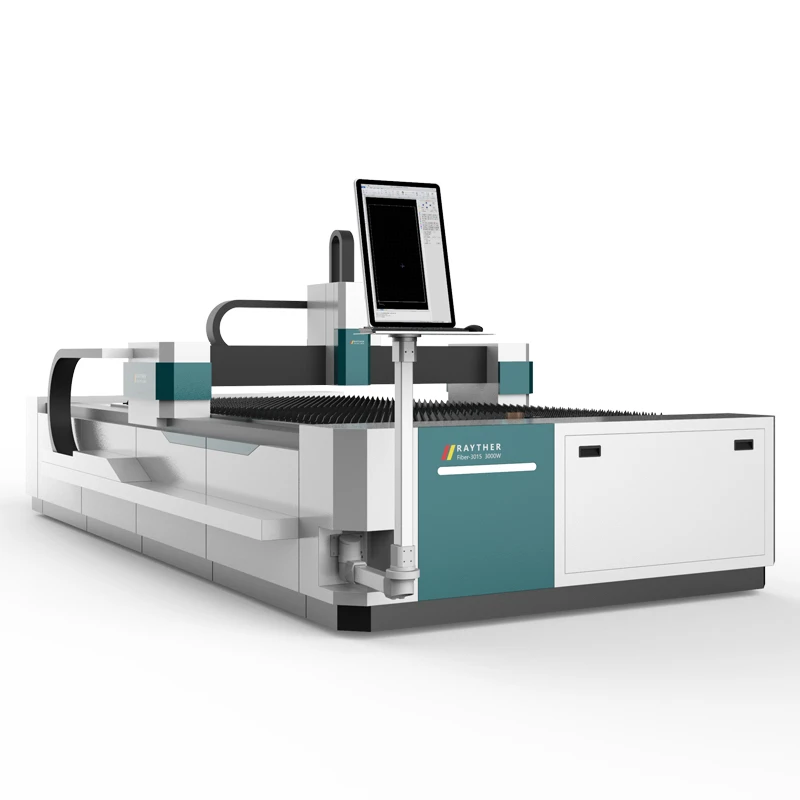
The working principle of laser cutting machines is based on the high energy density of laser beams. The equipment generates high-power laser beams through a laser source, which are then precisely focused onto a tiny area of the material surface by an optical focusing system, with the spot diameter as small as dozens of micrometers.
Take fiber laser cutting machines as an example. The optical fiber medium inside can efficiently transmit laser energy, causing the material surface to absorb a large amount of energy instantaneously. The temperature rises sharply to the melting and boiling points of the material, leading to melting and vaporization.
Meanwhile, high-pressure assist gases (such as oxygen and nitrogen) are ejected at supersonic speeds, rapidly blowing away the melted or vaporized material from the cutting area, forming a continuous slit and achieving material separation. Throughout this process, there is no physical contact between the laser and the material, avoiding problems like wear and deformation of traditional cutting tools, and significantly reducing tool replacement costs and maintenance time.
II. Unparalleled Cutting Advantages
In terms of precision, laser cutting machines can achieve micron-level machining accuracy. In precision mold manufacturing, they can cut tiny components with a tolerance of only ±0.02mm, ensuring high-precision assembly of molds and product quality. Regarding cutting speed, when cutting 10mm-thick carbon steel, traditional mechanical cutting can only complete a cutting length of 20 - 30cm per minute, while laser cutting machines can reach 1 - 2m per minute, increasing efficiency several times over. Their flexibility lies in the ability to handle complex graphics and tiny structures.
For example, when cutting the metal brackets of mobile phone camera modules, laser cutting machines can quickly cut out complex shapes such as hollow patterns, rounded corners, and irregular holes, meeting the production requirements of miniaturization and precision in electronic products. Moreover, the cut edges are smooth, eliminating the need for secondary grinding.
III. Wide Application in Multiple Fields
In the automotive manufacturing field, laser cutting machines are involved in the entire process of vehicle body production. Volkswagen factories use laser cutting machines for three-dimensional cutting of vehicle body steel plates, which can control the welding precision error of vehicle body components within 0.1mm, effectively enhancing the strength and safety of the vehicle body. In the aerospace field, Boeing uses high-power laser cutting machines to process titanium alloy aero-engine blades.
Compared with traditional processing methods, the production efficiency is increased by 40%, and the material utilization rate is raised from 40% to 70%. In the electronics manufacturing industry, Apple uses ultraviolet laser cutting machines to cut flexible circuit boards during the circuit board production process, achieving a minimum line width of 0.1mm, ensuring the precision and stability of internal circuits in electronic products.
IV. Promoting the Upgrading and Transformation of the Manufacturing Industry
After introducing laser cutting technology, traditional manufacturing enterprises have achieved a transformation in their production models. For instance, after a certain machinery manufacturing enterprise introduced an automated laser cutting production line, labor costs decreased by 35%, production efficiency increased by 60%, and the product defect rate dropped from 5% to 1.5%.
Automated laser cutting systems can also be integrated with MES (Manufacturing Execution System) and ERP (Enterprise Resource Planning System) to achieve real-time monitoring and management of production data and optimize production scheduling.
Additionally, during the laser cutting process, there is no use of cutting fluids, and almost no solid waste is generated, meeting the requirements of the EU RoHS environmental protection directive. This helps enterprises achieve green manufacturing transformation and enhance their competitiveness in the international market.
V. Stimulating Product Innovation and Design
The high precision and flexible processing capabilities of laser cutting machines enable product design to break through the limitations of traditional processes. In the home furnishing design field, designers use laser cutting technology to carve complex hollow patterns and three-dimensional designs on wooden panels, creating artistic furniture products.
In the medical device industry, laser cutting can be used to manufacture medical implants with complex porous structures, such as titanium alloy artificial joints. The porous structure can promote the growth of human bone cells, achieving better biocompatibility and providing technical support for medical product innovation.
VI. Prospects for Future Development
In the future, laser cutting technology will be deeply integrated with artificial intelligence to achieve intelligent process parameter optimization. Through machine learning algorithms, the equipment can automatically adjust parameters such as laser power, cutting speed, and gas pressure according to the material type and thickness, improving cutting quality and efficiency.
In the field of high-power applications, ten-thousand-watt laser cutting machines will be more widely used. In shipbuilding, they can achieve one-time through-cutting of steel plates thicker than 60mm, reducing the welding process.
At the same time, ultra-short pulse laser cutting technology will further develop. With picosecond and femtosecond-level pulse widths, it can achieve cold processing of hard and brittle materials such as glass and ceramics, avoiding thermal damage to the materials and having great application potential in fields such as consumer electronics and display panels.
--Rayther Laser Jack Sun--