


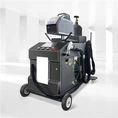
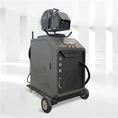
The core of the laser welding operating procedures is "safety first, standardized operation, and precise control." The process must be implemented step by step in three stages: "preparation before operation → execution during operation → completion after operation," ensuring both stable equipment performance and welding quality. The specific workflow is as follows:
I. Pre-operation Preparation: Laying the Foundation for Safety and Quality
1. Equipment Inspection
- Before powering on, ensure the laser generator, cooling system, optical components (focusing lens, protective lens), and CNC platform are free of damage or abnormalities, the coolant level is within the standard range, and there are no leaks in the water or air pipes.
- Start the device preheating, test whether the laser beam outputs normally, verify if the CNC platform positioning accuracy meets the standards, and check if the welding parameters (power, speed, defocus) match the workpiece requirements.
2. Workpiece Preprocessing
- Clean the oil stains, rust, and oxide layers in the welding area of the workpiece. Use alcohol for wiping or sandpaper for grinding to ensure a clean surface and prevent porosity or inclusions in the weld seam
.
- Use fixtures to firmly fix the workpiece on the welding platform, adjust the position to align the welding area with the laser focus, and avoid workpiece displacement during welding.
3. Security protection
- Operators must wear protective goggles corresponding to the wavelength of the laser, wear flame-retardant work clothes and gloves, and are strictly prohibited from staring directly at the laser beam or reflected light with bare eyes.
- Check if the protective fence in the welding area is closed, activate the smoke exhaust system to ensure good ventilation and prevent the accumulation of welding fumes; Non operators are prohibited from entering the work area.
II. Execution during operation: precise control of welding process
1. Parameter debugging and trial welding
- Based on the material (such as stainless steel, aluminum alloy) and thickness of the workpiece, input the preset welding parameters, and first conduct a small piece trial welding to observe whether the weld formation and penetration depth meet the requirements.
- If there are problems such as incomplete fusion or excessive spatter in the weld seam, adjust the laser power (increase the power for thickened workpieces), welding speed (too fast can lead to incomplete fusion) or defocus amount until the trial welding is qualified.
2. Formal welding
- Start the CNC platform or robotic arm, start welding according to the preset path, observe the status of the molten pool throughout the process, and ensure that the weld seam is continuous and without any breaks.
- During the welding process, it is prohibited to touch optical components or welding areas to avoid burns caused by laser reflection; If the position of the workpiece needs to be adjusted, the laser output must be paused first.
- Maintain a stable supply of protective gas (such as argon) and adjust the flow rate according to the material (usually 5-15L/min) to prevent oxidation of the weld seam.
3. Exception handling
- If the device alarms (such as cooling failure or abnormal laser power), immediately pause welding, turn off the laser power, troubleshoot the problem, and restart. Forcefully continue operation is prohibited.
- If there is workpiece displacement or weld deviation, stop the machine in time to adjust the fixture or welding path to avoid batch nonconformities.
III. Closing after operation: Standardized shutdown and maintenance
1. Device shutdown
- After welding is completed, turn off the laser output first, wait for the cooling system to continue running for 10-15 minutes (to room temperature), and then turn off the CNC platform and main power in sequence.
- Close the protective gas valve, clean the welding area of dust and waste residue, and avoid accumulation that may affect subsequent operations.
2. Inspection of workpieces and equipment
- Inspect the weld quality of the welded workpiece, with a focus on checking for defects such as cracks, porosity, and incomplete penetration. Any non-conforming workpiece should be promptly marked and reworked.
- Cleaning optical components: Dip specialized lens paper into lens cleaner and gently wipe the focusing lens and protective lens. If there are scratches or coating peeling on the lens, replace it in a timely manner.

3. On site organization
- Release the fixture, remove the workpiece, and organize the welding platform; Put the tools and consumables back in place, turn off the smoke exhaust system, and ensure that the work area is clean.
- Fill in the equipment operation record, indicating the specifications, parameters, and operating conditions of the welded workpiece for easy traceability and maintenance in the future.
IV. Attentions
- It is prohibited to operate the equipment without protective measures, and it is strictly forbidden to use laser beams to irradiate the human body or non welded workpieces.
- It is prohibited to arbitrarily modify the core parameters of the equipment (such as the upper limit of laser power), and it is forbidden to dismantle the protective device during equipment operation.
- Welding of flammable and explosive materials is prohibited, and the welding area must be kept away from flammable materials and equipped with fire extinguishing equipment.
If you want to know more about laser welding machine and laser cutting machines, pls visit https://www.raytherlasercutter.com/
OR https://www.raytherlasercutter.com/laser-welding-machine/laser-welder-welding-machine.html
From Tiffany, RAYTHER LASER