


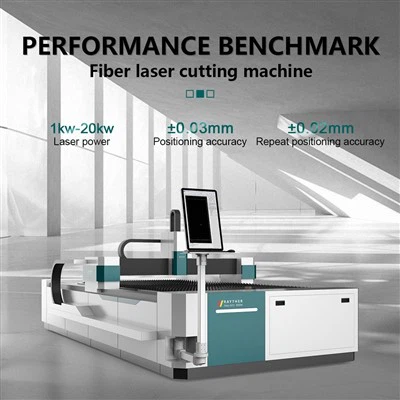
Main components and functions of the laser cutting machine
1.Laser generation system
Laser generator Type:
·CO₂ laser: Suitable for non-metallic materials (such as acrylic, wood) and some metal cutting, with power ranging from dozens of watts to several thousand watts.
·Fiber laser: With a small focused spot and high energy density, it is specifically designed for metal cutting (such as carbon steel, stainless steel, aluminum), with power reaching up to tens of thousands of watts.
·Solid laser (such as YAG): Originally used for precision processing, it is now gradually being replaced by fiber lasers.
Function: By exciting the working medium (gas, fiber or solid) with electrical energy, a monochromatic, highly directional laser beam is generated.
Laser power supply:
Function: To provide stable electrical energy for the laser, adjust the output power, and ensure the stability and controllability of the laser beam.
2.Beam transmission and focusing system
Optical lenses (reflector / focusing lens):
Reflector:
Made of gold-plated or silicon materials, it is used to reflect laser beams and change the path of light transmission (such as from the laser source to the cutting head).
It needs to be cleaned regularly to avoid the influence of dust on the reflectivity (dust can cause the lens to overheat and be damaged).
Focusing lens:
Made of quartz or zinc selenide (ZnSe) materials, it focuses parallel laser beams into extremely small spots (diameter approximately 0.1-0.3mm), increasing energy density and enabling material melting or vaporization.
Cutting head (laser head):
Composition: includes focusing lens, nozzle, sensor, etc. Function:
Precisely control the position of the laser focus (through electric focusing or automatic zooming).
3.motion control system
Numerical Control System (CNC Controller) Function:
Receive CAD/CAM design files (such as DXF, NC codes), and parse them into motor motion instructions.
Support functions such as manual programming, automatic layout, and break-point continuation cutting, ensuring the accuracy of the cutting path (errors usually ≤ ±0.05mm).
Common brands: Germany PA, Japan Fanuc, USA Hypertherm, etc.
Servo Motors and Transmission System
Servo Motors:
High-precision motors (such as AC servo motors), driving the worktable or cutting head to move, with fast response speed (acceleration can reach 2-5g).
Transmission Components:
Ball screw: suitable for high-precision, small travel scenarios (such as small desktop machines).
Linear guide rail + gear rack: used for large travel, high-speed equipment (such as large-format metal cutting machines), with a speed of up to 100m/min or more.
Linear motor: non-contact transmission, extremely fast speed (up to 200m/min), high precision, used for high-end models.
4.Auxiliary gas system
Gas types and functions:
Oxygen is suitable for carbon steel and alloy steel. It is necessary to use a torch to assist in the combustion during cutting. It reacts with metals and releases heat, thereby increasing the cutting speed. The oxidized slag is expelled along with the airflow.
Nitrogen is suitable for stainless steel and aluminum. Its main function is to provide inert protection, preventing oxidation and ensuring a smooth, shiny and free-of-burr cutting surface.
Argon gas is suitable for high-reflection materials. Its main function is to reduce laser reflection loss when cutting high-reflection metals such as copper and aluminum.
5.Workbench and auxiliary devices
Cutting workbench Type:
Fixed workbench: The workpiece is fixed while the cutting head moves (suitable for small and medium-sized equipment).
Mobile workbench: Dual platforms alternate for loading and unloading materials, improving production efficiency (common in industrial-grade models).
Structure:
Metal grid or honeycomb base plate, supporting the workpiece and allowing slag to fall; some are equipped with vacuum suction devices to fix thin materials.
Waste collection and dust removal device:
Function: Collect smoke and dust generated during cutting, as well as metal slag (containing heavy metal dust), and purify the air through a filtration system (such as bag-type dust collector), meeting environmental protection requirements.
6.Cooling and temperature control system
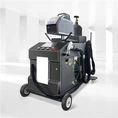
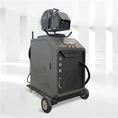
Refrigerator (cooling system) Function:
Provide circulating cooling water for laser devices and cutting head lenses to absorb heat (for example, for CO₂ lasers, the water temperature should be controlled at 20-25℃, with a fluctuation of ≤±1℃).
Inbuilt temperature sensors, in case of over-temperature, they will automatically alarm and shut down to prevent equipment damage.
Temperature Control Components:
These include cooling fans, heat exchangers, etc., which assist in controlling the temperatures of electrical cabinets, servo motors, and other components.
7.Safety and Protection System
Laser Protection Cabin:
Function: Made of dark acrylic or metal plates, it prevents direct laser exposure to the eyes (avoiding retinal burns), and is partially equipped with observation windows (including filter glass).
Safety Sensors:
Emergency Stop Button: Quickly stops the machine in case of emergency.
Door Control Switch: Automatically cuts off the laser when the cabin door is opened to ensure operational safety.
Smoke Alarm and Fire Extinguishing Device:
Monitors the concentration of smoke in the cutting area to prevent fires (especially for flammable materials such as wood and plastic).
8.Summary: Collaborative Work Process of Core Components
Laser generation: The laser generator produces a beam, which is transmitted to the cutting head through a reflector.
Focusing and cutting: The focusing lens reduces the light spot size, and simultaneously assists with gas spraying. The laser melts the material, and the motion system moves along the trajectory.
Precise control: The numerical control system adjusts the power, speed, and gas type in real time to adapt to different material thicknesses and cutting requirements.
--Rayther Laser Camila Wang