


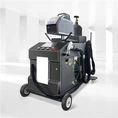
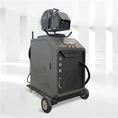

Laser Welding Machines: Key Applications Across Industries
1. Automotive Manufacturing: Enabling Lightweight & Precision Engineering
Body Structures:Aluminum alloy roofs (fiber laser wire-filling welding, 4–6kW): BYD's upgraded production lines boosted weld strength by 30% and single-shift output from 120 to 200 units/hour.
Door panels & floor components (fusion welding): Achieve "protrusion-free seams," improving flatness by 70% and cutting spray-coating material waste by 15%.
Components:Headlight sealing (plastic laser welding): 0.1mm precision ensures leakproof performance across -40℃ to 120℃ environments.
Tailored blanks (2–4kW lasers, 0.2mm spot size): Volkswagen increased material utilization by 25%, slashing production costs.
2. Electronics & Semiconductor: Critical for Micron-Level Precision
Precision Devices:Ultra-thin battery tabs (0.1mm Al-Ni): ±5μm backmark uniformity (Apple supply chain standard) eliminates thermal runaway risks in lithium batteries.
Semiconductor packaging (laser solder ball welding): 50μm solder joint precision delivers 99.99% yield (Huawei HiSilicon case study).
Consumer Electronics:Smartphone batteries (450W pulsed laser): Heat-affected zone <0.05mm meets strict safety requirements.
FPCB repair (pulsed laser): Precisely fixes micron-scale circuit damage in flexible boards.
3. New Energy: Core to Battery, Hydrogen, & PV Manufacturing
Power Batteries:Module welding (20kW fiber laser): 15m/min welding speed with <0.1% defect rate (CATL production lines).
Hydrogen storage tanks (12kW disk laser): Welded stainless steel bipolar plates pass 150MPa pressure tests.
Photovoltaic Modules:Silicon wafer interconnection (450nm blue laser): Dissimilar-material welding cuts conversion efficiency loss to 0.3%, surpassing traditional methods.
4. Aerospace & Defense: Reliability in Extreme Conditions
Aerospace Structures:Titanium alloy fuselages (16kW disk laser deep-penetration welding): 10:1 aspect ratio reduces Airbus A350 weight by 15%.
Engine blade repair (coaxial powder-fed cladding): 80% cost savings vs. new parts, extending service life.
Spacecraft:Aluminum alloy fuel tanks (vacuum laser welding): SpaceX achieves 100% X-ray inspection pass rate, eliminating porosity.
5. Medical & Bioengineering: Precision + Biocompatibility
Medical Devices:Heart stents (femtosecond laser on 316L stainless steel): 40% better vascular patency reduces thrombosis risks.
Endoscope sealing (pulsed laser-welded titanium): Withstands 200 sterilization cycles, meeting medical-grade standards.
Implants:Artificial joints (laser melting/SLM): 80% porosity promotes osteocyte growth, enhancing biocompatibility.
6. Home Appliances & Consumer Goods: Driving Quality Upgrades
White Goods:AC compressors (6kW fiber laser replacing TIG welding): Gree cuts energy use by 60% on production lines.
Washing machine drums (laser-welded stainless steel): 8dB noise reduction improves user experience.
Jewelry:Precious metal welding (50W pulsed laser): 95% "seamless repair" rate for 0.3mm gold chains, ideal for high-end customization.
7. Emerging Sectors: Technology Fusion Unlocks New Uses
Additive Manufacturing: Laser Directed Energy Deposition (DED) repairs turbine blades with 90% material utilization.
Rail Transit: High-speed train carriages (15kW laser-MIG hybrid welding): 3x longer joint fatigue life ensures safety.
Niche Markets: Penetrates sanitary ware (pipe/valve welding), eyewear (titanium frame welding), and complex hardware (impellers, handles).
2025 Technological Trends
Visual tracking enables ±0.05mm weld self-adaptation.
Next-gen fiber lasers reduce energy consumption by 30%.
Laser-ultrasonic hybrid welding overcomes dissimilar-material challenges, fueling cross-industry innovation.
-------------------------
Ryder