


1. Resistance welding
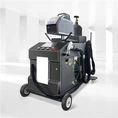
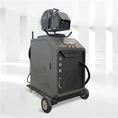
It is used to weld thin metal parts, clamp the workpiece to be welded between two electrodes, and melt the surface of the electrode contacted by a large current, that is, the welding is carried out through the resistance heating of the workpiece. The workpiece is easily deformed. Resistance welding is welded through both sides of the joint, while laser welding is only performed from one side. The electrodes used in resistance welding need frequent maintenance to remove oxides and metal adhered from the workpiece. Laser welding of thin metal lap joints does not In contact with the workpiece, the beam can also enter the area that is difficult to be welded by conventional welding, and the welding speed is fast.
2. Argon arc welding
Using non-consumable electrodes and shielding gas, it is often used to weld thin workpieces, but the welding speed is slower, and the heat input is much larger than laser welding, which is prone to deformation.
3. Plasma arc welding
Similar to argon arc, but its welding torch will generate a compressed arc to increase the arc temperature and energy density. It is faster than argon arc welding and has a larger penetration depth, but it is inferior to laser welding.
4. Electron beam welding
It relies on a beam of accelerated high-energy-density electrons to hit the workpiece, generating huge heat in a small dense area on the surface of the workpiece to form a "small hole" effect, thereby implementing deep penetration welding. The main disadvantage of electron beam welding is that a high vacuum environment is required to prevent electron scattering, the equipment is complex, the size and shape of the weldment are limited by the vacuum chamber, and the assembly quality of the weldment is strict. Non-vacuum electron beam welding can also be implemented, but due to the electron Scattering and poor focus affect the effect. Electron beam welding also has magnetic offset and X-ray problems. Since electrons are charged, they will be affected by magnetic field deflection. Therefore, electron beam welding workpieces are required to be demagnetized before welding. X-rays are particularly strong under high pressure, requiring protection of the operator. Laser welding does not need a vacuum chamber and demagnetization treatment on the workpiece before welding. It can be carried out in the atmosphere, and there is no problem of X-ray protection, so it can be operated online in the production line, and can also weld magnetic materials.