


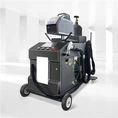
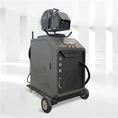

Laser Welding Machine: A Key Force in Modern Manufacturing
I. Development History
The laser welding machine has emerged and evolved alongside the development of laser technology. After the advent of the laser in the 1960s, its application in the field of welding has been gradually expanded. The United States and Japan took an early lead in this regard. In China, before the 1970s, the focus was on pulsed laser welding, and later, continuous progress has been made in terms of mechanization and automation.
II. Working Principle
It utilizes a high-energy density laser beam to raise the temperature of the material surface, causing it to melt and fuse. There are two modes: heat conduction welding and deep penetration welding. In heat conduction welding, the energy slowly transmits into the interior of the material. In deep penetration welding, the surface of the material vaporizes to form a small hole, and the molten pool solidifies as the laser moves, creating a weld seam.
III. Technological Advantages
High Precision: It can reach the micron level, suitable for precision welding in electronic chips and other fields.
Fast Speed: The efficiency is significantly higher than traditional welding methods, for example, in the welding of automobile bodies.
Small Heat Affected Zone: It avoids excessive thermal deformation of materials, making it suitable for heat-sensitive materials.
Strong Material Adaptability: It can weld metals, non-metals, and dissimilar materials.
IV. Types and Applications
Automatic Laser Welding Machine: Used for the automatic welding of metal parts, such as in electronic and electrical components.
Laser Die Surfacing Welding Machine: Handheld type, used for die manufacturing and repair, such as in digital and automotive dies.
Fiber Optic Transmission Laser Welding Machine: With a fine spot, it is used for precision parts, medical devices, etc.
Laser Spot Welding Machine: Used for repairing holes in electronic components, spot welding of jewelry, and other small items.
Sensor Welding Machine: Used for the hermetic welding of special sensors, such as temperature sensors and underwater sensors.
V. Application Fields
Automotive Industry: It improves the strength of the vehicle body, reduces weight, and simplifies the manufacturing process of components.
Electronics Industry: It ensures the welding precision of electronic components and avoids thermal damage.
Biomedical Industry: It guarantees the high precision and biocompatibility of medical devices.
Manufacturing Industry: It enhances the quality of metal products, handicrafts, etc.
VI. Development Trends
Intelligentization: Combining artificial intelligence and automation to achieve intelligent control and flexible production.
High Performance: Improving power and beam quality to expand applications in thick material welding and other areas.
Green and Energy-saving: Reducing energy consumption, using environmentally friendly materials, and practicing sustainable development.
--Jack Sun--