


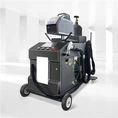
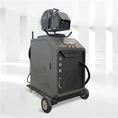

In the field of precision machining in modern manufacturing, laser pipe cutting machines are redefining the standards of efficiency and accuracy in pipe processing with revolutionary technological breakthroughs. The emergence of this equipment has not only completely transformed traditional pipe processing methods but also propelled numerous industries towards intelligence and refinement.
I. Working Principle: The Exquisite Integration of Technology and Craftsmanship
1.1 Laser Energy Focusing and Material Removal
The core principle of laser pipe cutting machines is based on the focusing effect of high-energy-density laser beams. The equipment generates high-power-density laser beams through fiber lasers, which are conducted through optical paths and focused on the surface of the pipes by focusing lenses. In an extremely short period, the local area of the pipes is heated to the melting point or even the boiling point, causing the material to melt or vaporize instantly.
1.2 Role of Different Auxiliary Gases
Regarding the selection of auxiliary gases, different gases play distinct roles. When oxygen is used as the auxiliary gas, it reacts oxidatively with metal pipes, releasing additional heat and accelerating the cutting speed, which is suitable for materials such as carbon steel. Nitrogen can prevent the cut from oxidizing when cutting materials like stainless steel, ensuring the smoothness of the cutting surface. Compressed air, with its lower cost, is commonly used for cutting ordinary metal materials where the cutting quality requirements are not extremely strict. As the pipes move relative to the laser beam, high-pressure gas blows away the melted or vaporized material from the slit, forming a continuous cut and thus achieving the cutting of the pipes.
1.3 Coordinated Operation of Key Technologies
The entire process involves the coordinated operation of laser technology, numerical control technology, and mechanical transmission technology.
1.3.1 Intelligent Numerical Control System
Advanced numerical control systems are equipped with intelligent programming software. Operators only need to import CAD drawings, and the system can automatically generate the cutting path. Based on parameters such as the material and thickness of the pipes, it precisely controls the power, frequency, and cutting speed of the laser beam, ensuring that the cutting accuracy reaches the micron level. For example, when cutting a circular pipe with a diameter of 100mm, the error can be controlled within ±0.05mm.
1.3.2 High-Precision Mechanical Transmission
The high-precision mechanical transmission device adopts linear motors and high-precision guide rails, driven by servo motors, ensuring the stable operation of the pipes during the cutting process. Even when cutting complex curves, it can avoid cutting errors caused by jitter.
II. Performance Advantages: A Comprehensive Surpassing of Traditional Processes
2.1 Superior Cutting Precision
Compared with traditional pipe cutting methods, such as flame cutting, plasma cutting, and sawing, laser pipe cutting machines demonstrate unparalleled advantages. In terms of cutting accuracy, the kerf width of laser pipe cutting machines is extremely narrow, generally between 0.1 - 0.3 millimeters, enabling fine processing of complex patterns and tiny holes to meet the manufacturing requirements of high-precision products. For instance, when cutting the frames of automotive seats, laser pipe cutting machines can precisely cut out hollow patterns, reducing weight while ensuring structural strength. In contrast, the kerf width of flame cutting can reach 3 - 5 millimeters, with low cutting accuracy and significant thermal deformation, making it difficult to meet the high-precision requirements of modern automotive manufacturing.
2.2 High Cutting Efficiency

In terms of cutting efficiency, laser pipe cutting machines have a high cutting speed, especially for thin-walled pipes, with a cutting length of several meters per minute, greatly shortening the processing cycle. Moreover, laser pipe cutting machines can complete the cutting of various shapes with a single clamping, eliminating the need for frequent tool changes and reducing auxiliary time. For example, when cutting a batch of profiled pipes, traditional equipment takes 3 hours, while a laser pipe cutting machine only needs 40 minutes.
2.3 Cost-Effectiveness in the Long Term
In the long run, although the initial purchase cost of laser pipe cutting machines is relatively high, due to their high processing efficiency, low scrap rate, and the absence of frequent tool replacement, the comprehensive usage cost is actually lower than that of traditional cutting equipment.
2.4 Excellent Cutting Quality and Flexibility
In addition, laser pipe cutting machines offer excellent cutting quality, with smooth and flat cut surfaces, free of burrs and oxide layers, simplifying subsequent processing procedures and reducing processing costs. Meanwhile, laser pipe cutting machines also have a high degree of flexible processing capabilities. By simply modifying the numerical control program, different cutting patterns and sizes can be quickly switched, making them suitable for small-batch and multi-variety production modes. For example, in customized furniture production, laser pipe cutting machines can quickly adjust the cutting plan according to customer needs, producing pipe components of different specifications and shapes.
III. Application Fields: Wide Coverage of Multiple Industries
3.1 Applications in the Construction Industry
The application fields of laser pipe cutting machines are extremely extensive. In the construction industry, they are used to process steel structure pipes and fabricate complex building shapes and components. For example, the steel structure frame of the Shanghai Tower extensively uses profiled pipes processed by laser pipe cutting machines. These pipes, through precise cutting and splicing, form the unique appearance and stable structure of the building. In bridge construction, the pipes processed by laser pipe cutting machines are used to make the supporting structures and guardrails of bridges, and their high-precision cutting ensures the safety and aesthetics of the bridges.
3.2 Applications in the Automotive Manufacturing Field
In the automotive manufacturing field, laser pipe cutting machines can precisely cut key components such as automotive frames and exhaust pipes, improving the safety and lightweight level of vehicles. Take new energy vehicles as an example. To extend the driving range, there is a high demand for vehicle lightweighting. Laser pipe cutting machines can cut aluminum alloy pipes into complex hollow shapes, reducing weight significantly while ensuring strength.
3.3 Applications in the Aerospace Field
In the aerospace field, with extremely high requirements for materials and processing accuracy, laser pipe cutting machines have become important equipment for aerospace component processing due to their high precision and high-quality cutting performance. For example, the fuel conduits of aircraft engines need to operate in high-temperature and high-pressure environments. The conduits cut by laser pipe cutting machines have precise dimensions and smooth surfaces, effectively reducing the risk of fuel leakage.
3.4 Applications in the Medical Device Industry
In the medical device industry, laser pipe cutting machines can be used to cut precision components such as medical catheters and stents, ensuring the safety and reliability of medical products. Medical stents need to be used in human blood vessels for a long time. The stents cut by laser pipe cutting machines have precise dimensions and good biocompatibility, contributing to improving the treatment effect.
IV. Development Trends: Progressing Towards Intelligence and Diversification
4.1 Intelligent Development
With the continuous advancement of technology, laser pipe cutting machines are evolving towards intelligence, automation, and multifunctionality. In terms of intelligence, the introduction of artificial intelligence and machine learning technologies enables laser pipe cutting machines to automatically identify the material, size, and defects of pipes, optimize cutting parameters, and achieve adaptive cutting. For example, through AI algorithms analyzing the surface texture of pipes, the laser power can be adjusted automatically to avoid cutting defects. At the same time, through the Internet of Things technology, remote monitoring and fault diagnosis of the equipment are realized, improving the maintenance efficiency and operational stability of the equipment. Currently, some enterprises have developed remote management platforms for laser pipe cutting machines. Operators can view the equipment operation status in real-time via mobile phones or computers, receive fault warning information, and remotely adjust equipment parameters.
4.2 Automation and Production Line Integration
In terms of automation, combining with robotics technology to build automated laser pipe cutting production lines can realize automatic loading and unloading, positioning, and cutting of pipes, further improving production efficiency and reducing labor costs. In the workshops of some large manufacturing enterprises, automated laser pipe cutting production lines can operate continuously for 24 hours, significantly increasing production capacity.
4.3 Multifunctional Innovation
In terms of multifunctionality, the research and development of composite processing equipment integrating multiple functions such as cutting, welding, and drilling expand the application scope of laser pipe cutting machines. For example, some new types of laser pipe cutting machines can perform welding immediately after cutting, reducing the turnover time between processes.
4.4 Green and Sustainable Development
In addition, green environmental protection is also an important development direction for laser pipe cutting machines in the future. Reducing the energy consumption of equipment, minimizing dust and harmful gases generated during the laser cutting process, and adopting more environmentally friendly materials and processes will become inevitable requirements for industry development. Currently, relevant environmental protection standards and specifications are being formulated within the industry, promoting laser pipe cutting machine manufacturers to use energy-efficient lasers and high-efficiency dust removal equipment to reduce the impact on the environment.
With their outstanding performance and broad development prospects, laser pipe cutting machines have become indispensable key equipment in modern manufacturing. With continuous technological innovation and improvement, they will play a more important role in more fields, promoting the manufacturing industry to a higher level and opening a new chapter in pipe processing.
--Jack Sun--