


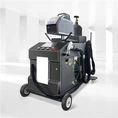
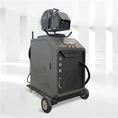

1. General Maintenance of a Laser Welding Machine
Laser welding machines include multiple subsystems such as the laser source, optical path, cooling system, gas supply, and motion control. Each requires regular inspection and care.
Cooling System
The chiller should be cleaned and filled with deionized water or distilled water to prevent scaling and ensure efficient heat dissipation.
Water filters must be checked and replaced regularly to avoid clogging.
The cooling water should typically be changed every 3 to 6 months depending on usage and water quality.
Optical Components
Protective lenses, focusing lenses, and mirrors should be inspected frequently for dust, spatter, or burns.
Lenses should be cleaned using professional lens paper and alcohol.
If the optical component shows cracks, burns, or coating damage, it should be replaced immediately.
Gas Path and Supply
Check shielding gas pipelines for leaks and ensure pressure is stable.
Filters in the gas path should be replaced every 6 to 12 months to maintain clean gas flow.
Motion and Mechanical Parts
Linear guides, bearings, and motors require lubrication to reduce friction and wear.
Regular inspection ensures that positioning accuracy and welding path stability are maintained.
Electrical and Software Systems
Regularly inspect power cables, grounding, and connections to prevent loose contacts.
Back up software settings and parameters to avoid production interruptions caused by system errors.
2. Common Wear Parts of Laser Welding Machines
Although a laser welding machine has fewer consumables compared with traditional welding, certain parts are still subject to wear due to heat, optical stress, or mechanical load.
Protective Lens
Function: Shields the focusing lens from spatter and smoke.
Replacement cycle: About every 1 to 3 months depending on material type, welding environment, and cleanliness.
Focusing Lens
Function: Concentrates the laser beam into a fine spot.
Replacement cycle: Usually 6 to 12 months, but may vary based on workload and gas protection.
Nozzles
Function: Guides shielding gas and stabilizes the welding process.
Replacement cycle: 2 to 6 months, depending on welding intensity and spatter buildup.
Optical Fiber Connectors
Function: Transmit the laser beam from the source to the welding head.
Replacement cycle: Typically 1 to 2 years, though lifespan depends on cleanliness and handling.
Water Filters and Gas Filters
Function: Maintain cleanliness in cooling and gas systems.
Replacement cycle: 3 to 6 months for water filters, 6 to 12 months for gas filters.
O-rings and Seals
Function: Maintain airtightness in optical modules and gas pipelines.
Replacement cycle: 6 months to 1 year depending on usage environment.
3. Conclusion
Maintaining a laser welding machine requires a systematic approach: clean the cooling system, protect and inspect optical elements, ensure stable gas supply, and lubricate motion parts. The most common wear parts include protective lenses, focusing lenses, nozzles, filters, and fiber connectors. Their replacement cycles vary from a few months to a couple of years depending on operating conditions. Proactive replacement not only avoids sudden breakdowns but also guarantees consistent welding quality and higher production efficiency.
-- Rayther Laser Lyra Zhang