


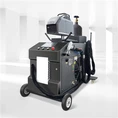
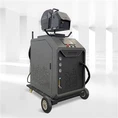
International Safety Class Standards for Laser Welding Machines

1. IEC 60825 Standard (International Electrotechnical Commission)
The IEC 60825 standard classifies laser products into four categories based on their safety risks:
Class 1: Completely safe. Lasers in this class have extremely low power or are fully enclosed, ensuring no hazardous exposure to laser radiation under normal use. Examples include some laser printers.
Class 2: Low-power lasers (typically 0.4 mW–1 mW). The radiation can cause eye discomfort, but short-term exposure (usually <0.25 seconds) does not result in permanent damage. Eye blinking reflexes provide natural protection.
Class 3: Medium-power lasers, further divided into:
Class 3A: Visible continuous lasers (1–5 mW). Direct viewing of the beam is hazardous, but diffuse reflections are generally safe.
Class 3B: Continuous lasers (5–500 mW). Direct exposure to the beam is dangerous, but diffuse reflections are safe at a distance >13 cm for <10 seconds.
Class 4: High-power lasers (>500 mW). These can cause immediate and permanent eye damage, skin burns, and fire hazards. They are the highest-risk class, including most industrial laser welding machines.
2. US FDA Standard (Food and Drug Administration)
The FDA classifies laser products into categories and subcategories with specific warning requirements:
Class I: No special warning labels needed; considered inherently safe.
Class II: Labels must state: "LASER RADIATION – DO NOT STARE INTO BEAM" and "CLASS II LASER PRODUCT".
Class IIIa: Labels must state: "LASER RADIATION – AVOID DIRECT EYE EXPOSURE" and "CLASS IIIa LASER PRODUCT".
Class IIIb: Labels must state: "LASER RADIATION – AVOID DIRECT EXPOSURE TO BEAM" and "CLASS IIIb LASER PRODUCT".
Class IV: Labels must state: "LASER RADIATION – AVOID EYE OR SKIN EXPOSURE TO DIRECT OR SCATTERED RADIATION" and "CLASS IV LASER PRODUCT".
3. Chinese National Standards (GB)
China's GB standards align with international classifications but include specific power ranges:
Class 1: Ultra-low power (micro-watt level). No protection needed, e.g., some laser printers.
Class 2: 0.1–1 mW. Safe for brief viewing due to natural eye protection reflexes, e.g., laser pointers.
Class 3A: 1–5 mW. Direct viewing through optical instruments is hazardous; warning labels required, e.g., laser alignment tools.
Class 3B: 5–500 mW. Direct beam exposure is dangerous; diffuse reflections are safe at >150 mm for <10 seconds, e.g., laser physiotherapy devices.
Class 4: >500 mW. Capable of causing skin burns, eye damage, and fires. Strict safety measures are mandatory, e.g., industrial laser welding systems.
4.Safety Implications for Laser Welding Machines
Most laser welding machines fall under Class 4 due to their high power (often >1 kW). Key safety measures include:
Enclosing the laser system in a shielded workstation.
Installing safety interlocks (doors, light curtains) to prevent unauthorized access.
Requiring operators to wear wavelength-specific protective eyewear (OD ≥4 for Class 4 lasers).
Marking equipment with clear hazard warnings and safety protocols.
In practical applications, laser welding machines usually belong to Class 4 laser products. Therefore, strict safety measures need to be taken, such as placing the laser source in an enclosed workstation, setting up safety doors and safety light gratings, and operators must wear protective glasses with suitable wavelengths.
5.Summary
In summary, laser welding machines are predominantly categorized as Class 4 laser products due to their high power outputs, posing significant risks of eye damage, skin burns, and fire hazards. International standards like IEC 60825, US FDA regulations, and Chinese GB standards provide a unified framework for risk classification, but compliance requires integrating technical safeguards (e.g., enclosed workstations, interlock systems) with operational protocols (e.g., protective gear, training). As laser power in industrial applications continues to rise (e.g., 10+ kW fiber lasers), adherence to these standards is critical not only for operator safety but also for preventing material damage and equipment failures. Stakeholders must prioritize risk assessments, regular maintenance, and updated training to align with evolving safety norms in laser welding technology.
--Rayther Laser Camila Wang