


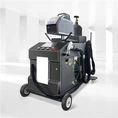
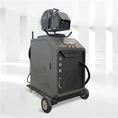

The setting of welding parameters for laser welding machines directly affects the welding quality, and it needs to be operated step by step in combination with welding requirements and equipment characteristics. The following details the parameter setting process from five dimensions: preparation work, core parameters, auxiliary parameters, test welding and adjustment, and safety precautions.
1. Preparation Work Before Parameter Setting
Before starting to set the parameters of the laser welding machine, basic preparation work must be completed to lay a foundation for subsequent parameter adjustment. Firstly, it is necessary to clarify the welding requirements, including the type and thickness of the materials to be welded, as well as the quality requirements after welding, such as whether it is necessary to ensure the strength, flatness or tightness of the weld.
Secondly, it is necessary to check the status of the laser welding machine to ensure that all components of the equipment operate normally, and there are no abnormal faults in the laser generator, optical system, motion mechanism, etc. At the same time, prepare the auxiliary tools required for welding, such as fixtures and protective gas devices, to ensure that the workpiece can be stably fixed during the welding process and that protective gas can be supplied in a timely manner.
2. Setting of Core Welding Parameters
Core welding parameters are the key to determining the welding effect, and they need to be accurately adjusted according to welding requirements. They mainly include three items: laser power, welding speed and focus position.
The setting of laser power should be based on material characteristics and thickness. Different materials have different absorption capacities for laser; for example, the absorption difference between metal materials and non-metallic materials is relatively large. Even for the same type of metal material, a higher laser power is required to ensure the weld penetration when the thickness increases. When setting, start with a lower power and gradually adjust it to a power range that can form a continuous and uniform weld.
Avoid material burn-through caused by excessively high power or insufficient welding firmness caused by excessively low power.
The adjustment of welding speed should match the laser power. Excessively fast speed will result in a short time for the laser to act on the material, and the weld may have problems such as incomplete fusion and discontinuity; excessively slow speed will cause excessive local heating of the material, which is prone to deformation, burning and other issues. During setting, on the basis of the determined laser power, adjust the welding speed to make the weld surface smooth and free of defects, while ensuring welding efficiency.
The determination of the focus position has a significant impact on the welding quality. Different focus positions lead to different energy densities of the laser on the workpiece surface. Usually, according to the material thickness and welding method, adjust the relative position between the focus and the workpiece surface to concentrate the laser energy in the area that needs to be welded, so as to obtain the best weld formation and strength. The appropriate focus position can be determined by means of test welding and observing the weld effect under different focus positions.
3. Setting of Auxiliary Welding Parameters
In addition to core parameters, the reasonable setting of auxiliary welding parameters can also improve the welding quality, which mainly includes protective gas parameters and pulse parameters (for pulsed laser welding machines).
The setting of protective gas parameters needs to consider the type of gas and gas flow rate. Common protective gases include argon, nitrogen, etc. Different gases have different protective effects and applicable materials, so it is necessary to select a suitable protective gas according to the welding material. Excessively large gas flow rate may cause turbulence on the weld surface and affect the welding quality; excessively small gas flow rate cannot effectively isolate the air, leading to weld oxidation. The gas flow rate should be adjusted according to the welding environment and workpiece size to ensure the formation of a stable protective gas layer in the welding area.
For pulsed laser welding machines, the setting of pulse parameters is crucial, including pulse width and pulse frequency. The pulse width determines the time that a single laser pulse acts on the workpiece, and the pulse frequency determines the number of pulses per unit time. Excessively short pulse width may lead to insufficient material melting, while excessively long pulse width is likely to cause overheating of the material; excessively high pulse frequency may lead to excessive weld overlap and affect the appearance, while excessively low pulse frequency will reduce the welding efficiency. It is necessary to comprehensively adjust the pulse width and pulse frequency according to the thickness of the welding material and welding requirements to achieve the ideal welding effect.
4. Test Welding and Adjustment of Parameters
After completing the initial parameter setting, test welding must be carried out, and parameters should be adjusted according to the test welding results to ensure that the welding quality meets the requirements. Firstly, select a test piece with the same material and thickness as the actual welding workpiece, and conduct test welding according to the set parameters. After the test welding is completed, inspect the weld, including appearance inspection and performance testing. The appearance inspection mainly observes whether the weld is continuous and flat, and whether there are defects such as air holes, cracks and undercuts; the performance testing can detect the strength and toughness of the weld through tensile tests, bending tests and other methods.
Adjust the parameters in a targeted manner according to the test welding inspection results. If there is a problem of incomplete fusion in the weld, the laser power can be appropriately increased or the welding speed can be reduced; if the weld has burn-through, the laser power needs to be reduced or the welding speed increased; if the weld oxidation is serious, the protective gas flow rate should be adjusted or the protective gas device should be checked for normal operation; if the weld formation of pulsed laser welding is not good, the pulse width or pulse frequency can be adjusted. After multiple rounds of test welding and parameter adjustment, a weld that meets the quality requirements can be obtained.
5. Safety Precautions After Parameter Setting
After the parameter setting is completed and the welding quality is confirmed to be qualified, safety precautions still need to be paid attention to to ensure the safety of operators and equipment. Operators must wear professional protective equipment, such as laser protective glasses, to avoid laser damage to the eyes; wear protective gloves and protective clothing to prevent scalding of the skin by high-temperature spatter generated during the welding process. At the same time, it is necessary to maintain good ventilation in the welding work area, and timely discharge the harmful gases generated during the welding process to prevent operators from inhaling them.
In addition, it is necessary to regularly check whether the parameter settings of the laser welding machine are stable, so as to avoid parameter deviation caused by equipment failure or external interference. During the operation of the equipment, if abnormal conditions are found, such as sudden changes in laser intensity, abnormal equipment noise, etc., the welding operation should be stopped immediately. The equipment can be used again only after checking the equipment and eliminating the faults.
--Rayther Laser Jack Sun--