


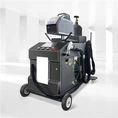
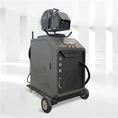
Efficiency Meets Precision: The Ultimate Guide to Industrial Laser Cutting Machines
In modern manufacturing, laser cutting technology has long been synonymous with high efficiency and precision. Whether in automotive manufacturing, sheet metal processing, or aerospace, a high-performance laser cutting machine is a powerful tool for improving production efficiency. This article will take you on a deep dive into the core components, key features, and powerful functions of laser cutting machines.
I. Core Components of a Laser Cutting Machine A high-quality laser cutting machine is a complex device composed of multiple sophisticated systems working in tandem. Its core components directly determine the processing quality:
1. Laser Source/Generator: The "heart" of the machine. Currently, fiber lasers are the mainstream choice, offering absolute advantages such as high beam quality, high electro-optical conversion efficiency, and low maintenance costs.
2. Cutting Head: The "brush" of the machine. Internally, it contains a focusing lens, nozzle, and sensor. It enables automatic focusing and automatically adjusts its height according to the material's contours, ensuring a consistent cutting focus.
3. CNC Controller & Software: The "brain" of the machine. Responsible for converting design drawings (such as CAD/DXF files) into the machine's operating trajectory. Excellent layout software maximizes the use of the material and reduces material waste.
4. Machine Bed & Transmission: The "skeleton and muscles" of the machine. The machine employs a heavy-duty welded or cast iron bed (tempered to eliminate internal stress), coupled with a high-precision servo motor, rack and pinion gears, and guide rails to ensure stability and vibration-free operation even at high speeds.
5. Chiller & Auxiliary System: The laser and cutting head generate significant heat during high-power operation. A high-power chiller unit provides precise temperature control, extending the lifespan of core components.

II. Key Features of Laser Cutting Machines Compared to traditional CNC punching machines, plasma cutting, or flame cutting, laser cutting machines possess irreplaceable competitive advantages:
1. Extreme Precision: The focused laser beam has an extremely small spot size, with positioning accuracy typically within ±0.03mm. The kerf is narrow (generally 0.1mm-0.3mm), resulting in smooth, burr-free edges, eliminating the need for secondary processing.
2. Unmatched Speed: Especially when cutting thin plates, fiber laser cutting machines can reach speeds of tens of meters per minute, several times more efficient than traditional processes.
3. Non-Contact Processing: Laser cutting is a non-contact process, avoiding material compression and thus preventing deformation or surface scratches.
4. High Flexibility: No expensive molds are required. Simply input the graphic into the software, and any complex irregular pattern, text, or workpiece can be cut with a single click anytime, anywhere.
Tips for Global Buyers:
When choosing a laser cutting machine, higher power is not always better. Instead, it should be determined by the main materials and thicknesses your end customers are processing. For example, 1kW - 3kW is suitable for cost-effective thin plate processing; 6kW - 12kW and above are the best choice for high-speed, large-scale mass production of medium and heavy plates.