


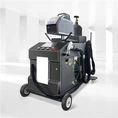
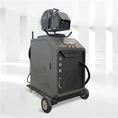
I. Basics of Laser Welding Technology: Definition and Core Principles
1. What is Laser Welding?

2. Core Technical Principles
Energy Conversion: Lasers (e.g., fiber lasers) convert electrical energy into laser light energy, with an electro-optical conversion efficiency of 30% - 40%, far exceeding traditional welding equipment (such as argon arc welding, which is only 5% - 10%).
Heat Conduction Mechanisms: It is divided into "conductive heat welding" (suitable for thin plates of 0.1 - 2mm with a spot power density < 10⁶W/cm²) and "deep penetration welding" (suitable for medium-thick plates of 2 - 10mm with a power density > 10⁶W/cm², forming a keyhole effect with a depth-to-width ratio of 5:1).
Material Compatibility: It can weld metals such as stainless steel, aluminum, carbon steel, copper, and titanium alloys, and can even achieve dissimilar metal welding (e.g., aluminum-steel, copper-aluminum).
II. Core Advantages of Laser Welding: Redefining Industrial Processing
1. Precision Revolution: Micron-level Precision Processing
Controllable Spot: By adjusting the focal length and power, ultra-fine welds of 0.1mm can be achieved, meeting the micron-level welding requirements of electronic components (such as PCB chip pins and lithium battery tabs).
Accurate Positioning: Combined with vision guidance systems (such as CCD cameras), the welding deviation can be controlled within ±0.05mm, far surpassing the ±0.5mm accuracy of manual welding.
2. Efficiency Leap: Subverting Traditional Welding Rhythms
Speed Advantage: The welding speed can reach 1 - 5m/min (argon arc welding is only 0.2 - 1m/min). For example, when welding 2mm stainless steel plates, laser welding is three times faster than argon arc welding and requires no subsequent grinding.
Automation Integration: It supports docking with robotic arms and assembly lines, enabling 24-hour unmanned production, making it suitable for large-scale welding of automotive components (e.g., each vehicle requires over 5,000 welds).
3. Quality Upgrade: Redefining Welding Standards
Minimal Heat-Affected Zone (HAZ): The heat-affected range around the weld is ≤0.5mm, preventing thin plate deformation (e.g., the flatness error of a 0.5mm aluminum alloy plate after welding is <0.1mm), eliminating the need for additional correction processes.
No Consumable Contamination: Non-contact welding (no need for welding wires or electrodes) avoids traditional welding defects such as slag inclusions and porosity. The weld strength can reach over 90% of the base material.
4. Functional Expansion: A Versatile Industrial Tool
4-in-1 Mode: High-end equipment supports multi-functional switching of "welding + cutting + cleaning + surface treatment." For example, the same device can first laser clean the surface oxide layer of a workpiece and then perform precision welding, saving over 30% of equipment procurement costs.
III. Application Scenarios Across Industries: Reshaping the Manufacturing Landscape
1. Automobile Manufacturing: Full-process Penetration from Body to Battery
Body Lightweighting: Laser tailor welding of aluminum alloy doors and roof frames (replacing traditional riveting) reduces weight by 15% - 20% while increasing rigidity by 20%. A typical case: A German automaker uses 3000W laser welding machines, with a single production line achieving 100,000 welds per day.
Battery Safety: Sealing welding of power battery packs (such as the outer shells of CATL prismatic batteries), with a weld leakage rate < 10⁻⁹mbar·L/s, ensuring no leakage in the -40℃ - 60℃ environment.
Precision Motor Processing: Welding of drive motor winding coils. After welding 0.3mm enameled wires, the resistance change rate is < 5%, ensuring motor efficiency.
2. Electronics and Electrical Appliances: The Core Battlefield of Micron-level Precision
Consumer Electronics: Seamless welding of mobile phone frames (stainless steel/titanium alloy) and glass covers, with a surface roughness Ra < 0.2μm, meeting the appearance requirements of high-end models.
Lithium Battery Production: Welding of tabs and aluminum/copper foils (thickness 0.1mm), using pulsed laser spot welding. Each spot weld takes only 2ms, and a single production line can produce 500,000 battery cells per day.
Connector Welding: Welding of USB-C interface terminals. With a spot diameter of 0.2mm, it avoids solder slag contamination of pins, increasing the yield rate to 99.9%.
3. Aerospace: The Only Choice in Harsh Environments
Titanium Alloy Components: Overlap welding of aero-engine blades (thickness 1 - 3mm), with a small heat-affected zone, avoiding stress concentration during high-temperature service. 100% of key components of a domestic large aircraft engine adopt laser welding.
Composite Material Bonding: Laser brazing of carbon fiber composite materials and metal frames solves the stress concentration problem of traditional riveting, reducing weight by over 10%.
4. Hardware, Kitchen, and Bathroom: 重塑美观与效率
Stainless Steel Products: Laser seam welding of sinks and faucets, with a weld width of 0.3mm. The surface can achieve a mirror effect without polishing, increasing production efficiency five times compared to argon arc welding.
Outdoor Facilities: Handheld laser welding of billboards and steel structures. Without the need for fixed tooling, it supports high-altitude operations (such as on-site welding and repair of 20-meter-high billboards), saving 60% of hoisting costs.
5. Medical and Jewelry: The Perfect Combination of Precision and Aesthetics
Medical Devices: Welding of stainless steel needles for medical syringes, with burr-free welds (burr size < 5μm), avoiding damage to human tissues; micro-welding of orthopedic implants (titanium alloy bone screws) with a strength of over 800MPa.
Jewelry Processing: Welding of diamond claw setting bases. The 0.1mm fine beam precisely fuses precious metals (such as 18K gold), avoiding damage to gemstones due to high temperatures, reducing the processing time for each piece of jewelry to 5 minutes.
6. Special Scenarios: "Impossible Missions" for Traditional Welding
High/Low Temperature Environments: Equipment maintenance in -50℃ polar regions and online welding of 200℃ high-temperature pipelines. Laser welding machines operate stably through water cooling systems, while traditional welding machines cannot function.
Flammable and Explosive Scenarios: Welding of oil pipelines under pressure (pressure ≤ 10MPa). Laser welding has no open flame and low radiation, with a safety level far exceeding arc welding.
IV. Knowledge Popularization: Practical Guides from Selection to Operation
1. How to Select a Suitable Laser Welding Machine?
Thin Plates (≤2mm): 1000 - 2000W (e.g., stainless steel doors and windows, mobile phone frames)
Medium-thick Plates (2 - 5mm): 2000 - 3000W (e.g., automotive bodies, battery packs)
Special Materials (copper, titanium alloy): 3000W+ (require deep penetration welding)
Note: For handheld welding machines, it is recommended to choose adjustable power between 1500 - 3000W to balance flexibility and applicability.
Laser: Prioritize fiber lasers (with a lifespan of over 100,000 hours and an electro-optical efficiency of 30%+). Avoid CO₂ lasers (large in size and with an efficiency of only 10%).
Cooling System: High-power equipment must be equipped with a water cooling machine (water temperature control ±1℃, flow rate ≥10L/min). Air cooling is only suitable for models with ≤500W.
Control System: Choose models that support PLC programming and are equipped with touchscreens for easy integration with automated production lines.
2. Essential Operation Tips: 5 Key Precautions
Safety Protection: Wear Class 1 laser safety glasses (with a wavelength matching the device output, e.g., special lenses for 1064nm fiber lasers). Set up light-blocking curtains in the welding area (light-blocking rate ≥99%).
Focal Length Calibration: Measure the focal length with a focus gauge before starting work every day (error ≤±0.2mm). Contamination of the focusing lens can cause a power reduction of over 20%, which needs to be wiped with absolute ethanol.
Gas Protection: When welding active metals such as aluminum and magnesium, argon gas (flow rate 5 - 15L/min) must be introduced to prevent oxidation. Nitrogen can be used for welding stainless steel to enhance weld brightness.
Workpiece Pretreatment: Remove surface oil stains and oxide layers (using laser cleaning or sandpaper polishing). The surface roughness Ra ≤12.5μm to avoid poor welding and burn-through.
Parameter Adjustment: Test the optimal parameters through test welds (same material and thickness). Record combinations of power, speed, and pulse frequency (e.g., 2000W for welding 2mm carbon steel, speed 2m/min, frequency 50Hz).
3. Maintenance: The Key to Extending Equipment Lifespan
Clean the welding head lens (wipe unidirectionally with lens paper dipped in absolute ethanol to avoid scratching).
Check the water level of the water cooling machine (add deionized water if below the scale; tap water is prohibited) and the water temperature (a display of 25±1℃ is normal).
Lubricate the guide rails of the handheld welding torch once a month (use food-grade lubricant to prevent metal jams).
Replace the cooling water (it is recommended to use deionized water with a resistivity >10MΩ·cm to avoid scaling).
Calibrate the laser coaxiality (test with a target paper; adjust if the spot offset >0.5mm).
Detect the power attenuation of the laser (use a power meter; contact the manufacturer for maintenance if the attenuation exceeds 15%).
When the equipment alarms for "high water temperature" (>30℃), "low air pressure" (protective gas pressure <0.5MPa), or "abnormal laser power," stop the machine immediately for inspection to avoid damaging core components.